As dam levels dip below 50% and rainfall remains unpredictable, the City of Cape Town has embarked on a groundbreaking initiative that has successfully saved over eight billion litres of drinking water annually, Cape {town} Etc reports.
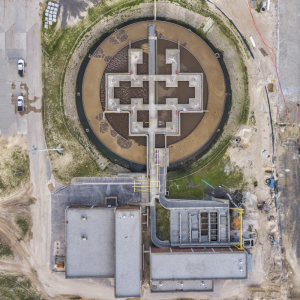
The Zandvliet Waste Water Treatment Works, covered in the January 2026 Plumbing Africa project article. Supplied by Greenfields Plumbing
Through the increased use of treated effluent wastewater that has undergone rigorous purification processes, the City is urging residents and businesses alike to embrace sustainable water practices, particularly for non-drinking purposes such as irrigation and industrial activities.
The City’s Water and Sanitation Directorate, in collaboration with engaged residents and industrious local businesses, has capitalised on this alternative water source to significantly alleviate the pressure on the potable water supply.
“We should only be using drinking water for essential purposes,” declared Councillor Zahid Badroodien, the City’s Mayoral Committee Member for Water and Sanitation. “This long-standing initiative forms part of the City’s broader vision of becoming a water-sensitive city that protects its water resources, uses water more efficiently, and embraces alternatives like treated effluent.”
During a recent visit to the treated effluent reuse (TER) pump stations in Bellville and Scottsdene, Badroodien witnessed first-hand the systems that are playing a vital role in reducing reliance on drinking water.
“We encourage businesses and institutions to consider this option to help save both water and money,” he added.
To clarify, treated effluent refers to wastewater that has been meticulously treated at wastewater treatment works to eliminate contaminants, rendering it safe for discharge into the environment.
A portion of this cleansed water is then filtered further and supplied to customers specifically for non-drinking uses.
- Currently, treated effluent is supplied from nine City wastewater treatment plants: Athlone, Bellville, Cape Flats, Kraaifontein, Macassar, Potsdam, Scottsdene, Zandvliet, and Melkbosstrand.
- It is more affordable than standard drinking water.
- Usage is restricted to non-potable applications such as irrigation and industrial tasks.
The Bellville TER pump station, commissioned in March 2025, is notably effective, providing around 4.3 million litres of treated effluent each day to users along a network that stretches approximately 15km.
Meanwhile, the Scottsdene TER pump station which broke ground in September 2023 and is expected to be fully operational by the end of April 2026 will potentially supply up to six million litres daily over an extending 14km network.
This growing infrastructure aims to benefit a range of sectors, from industries and sports facilities to parks and schools in areas including Bellville Industria and Brackenfell.
Currently, there are 345 users hooked up to a 330km network, but as more projects like the Zandvliet TER pump station – 85% complete and set to finish by September 2026 – come online, this number is anticipated to rise significantly.
To ensure that future generations have access to water, Badroodien stresses the urgency in promoting treated effluent for responsible water usage: “The more customers that engage with this innovative option, the better for our precious water resources.”
Source
By Capeetc, Cape Town Etc