By Chris Coetzee, OHSS Consulting
In the industrial and construction sectors, we are obsessed with shutdown procedures. Whether it’s a multimillion-rand processing plant, a simple table saw or a site generator, we know that failing to power down correctly leads to mechanical fatigue, blown circuits or catastrophic failure. We follow the manuals. We check the gauges. We lock the gates. But there is one engine we leave running at redline, seven days a week, 365 days a year: The Tradie brain.


To protect your mental health and your relationships, you need a 15-minute handbrake.”
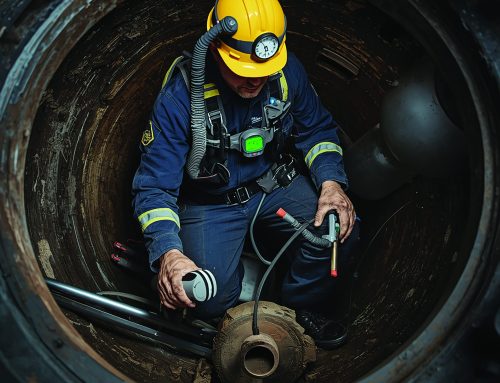
Yanalya | Magnific.com
At F.I.T. we see it every day. A plumber finishes a complex commercial fit-out, or a supervisor navigates a day of delayed deliveries and sub-contractor friction. They pack the tools, hop in the bakkie and drive home. Physically, they’ve left the site. Mentally?
They’re still wearing the hard hat. They walk through their front door and within five minutes, they’re snapping at their partner about the dishes or feeling a crushing sense of ‘fog’ while trying to play with their kids.
This isn’t a character flaw. It’s a biological ‘overdrive’ that hasn’t been switched off. To protect your mental health and your relationships, you need a 15-minute handbrake.
The science of ‘site mode’
To understand why you can’t just relax, we have to look at the biology of the trade. When you are on-site, your brain is operating in a state of high-beta brainwaves. You are scanning for hazards, troubleshooting technical faults and managing high-stakes timelines. Your sympathetic nervous system, the ‘fight or flight’ response, is humming. Even if you aren’t in immediate danger, the constant noise, the pressure of a deadline and the physical toll of the work keep your cortisol and adrenaline levels elevated. This is site mode. It’s what keeps you sharp and keeps you alive in a dangerous environment.
The problem arises when you bring site mode into the living room. Your family doesn’t need a high-alert safety officer, they need a father, a mother or a partner. If you don’t intentionally downshift, your body stays stuck in a stress loop, leading to burnout, insomnia and eventually, the kind of ‘short fuse’ that erodes the things you’re actually working so hard to provide for.
Step 1: The physical ‘de-kitting’ ritual (0–5 minutes)
Your brain is incredibly sensitive to environmental cues. For years, you have subconsciously linked your work boots, your hi-vis gear, and the smell of grease to production. When you wear that gear, your brain stays in work mode.
The first part of the handbrake happens the moment you cross the threshold of your home, or ideally, before you even leave the site office.
• The gear shed: If possible, leave your boots and your tool belt in the garage or a dedicated mudroom. As you unlace your boots, visualise yourself unlacing the day’s stress.
• The shower reset: A five-minute shower isn’t just about washing off the grit. Use the temperature change to shock your system out of its loop. Feel the water hitting your neck and consciously tell yourself, “The shift is over. The site is secure. I am home.”
July 2026 Volume 32 I Number 05 www.plumbingafrica.co.za
ASSOCIATIONS
Step 2: The ‘bakkie breath’ (5–10 minutes)
Most Tradies use the drive home to decompress, but usually, we’re just ruminating. We’re replaying a conversation with a difficult client or worrying about a measurement we might have got wrong. By the time we park, we’re more wound up than when we left.
Instead of rushing from the driver’s seat to the front door, try the twominute recalibration. Park the bakkie, turn off the radio, and stay put. Use a technique called box breathing or extended exhalation:
- Inhale through your nose for a count of four.
- Hold that breath for a count of four.
- Exhale slowly through your mouth for a count of eight.
The long exhale is the ‘secret code’ to your nervous system. It stimulates the Vagus Nerve, which acts as a literal brake for your heart rate and signals your brain to switch from the sympathetic (stress) to the parasympathetic (rest and digest) system.
Step 3: The external hard drive (10–15 minutes)
The reason your brain keeps ‘looping’ work thoughts is a psychological phenomenon called the Zeigarnik Effect, which states that the human brain hates unfinished tasks. If you have three jobs left for tomorrow, your brain will keep them in active memory all night so you don’t forget them. This is what causes that 2:00AM ‘panic’ wake-up.
To stop this, you need an external hard drive – a simple notebook or a dedicated notes app on your phone. Before you leave the bakkie, write down:
• The three most important tasks for tomorrow morning.
• One thing that went well today (this retrains your brain to look for wins instead of just hazards).
• One ‘open loop’ you’re worried about.
By writing it down, you are giving your brain permission to stop thinking about it. You’ve outsourced the memory. The list will be there in the morning; it doesn’t need to live in your head while you’re trying to eat dinner.
Why toughing it out is a bad strategy
In our industry, there’s a lingering stigma that mental health is for people who can’t handle the pressure. At F.I.T., we argue the opposite. A high-performance athlete wouldn’t dream of finishing a sprint and then keeping their heart rate at 150bpm for the rest of the night. They prioritise recovery because they know that’s where the strength is built. As an industrial professional, your mental recovery is what allows you to return to the site tomorrow with the focus required to work safely and efficiently.
If you don’t use the handbrake, you aren’t being ‘tough’, you’re being inefficient. You are burning fuel you don’t have, and eventually, the engine will seize.
The challenge for the week
This week, we challenge you to implement the 15-minute handbrake.
- De-kit immediately.
- Breathe for two minutes in the bakkie.
- Dump your to-do list onto paper.
Watch how the atmosphere in your home changes. Watch how your sleep improves. And most importantly, watch how your passion for the trade returns when it’s no longer a 24-hour burden.
Your tools are for the site. Your head is for your life.