By Kurt Vermaak of Zero2One Plumbing
In this article, Kurt Vermaak breaks down what limescale is, how it forms, how prevalent it is in South Africa, as well as how different parts of plumbing systems are affected by limescale. This is part one of a two-part series.
What is limescale, and how does it form?

Limescale is more than just a cosmetic nuisance – it affects plumbing systems.
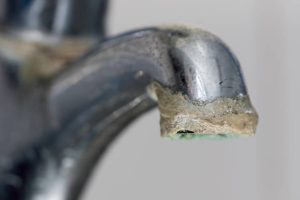
The most common component of limescale is calcium carbonate (CaCO₃).
All images supplied by Kurt Vermaak
Limescale is a hard, chalky deposit that forms when water containing high levels of dissolved minerals – primarily calcium and magnesium (known as hard water) – passes through plumbing systems and heating equipment.
When hard water is heated or when water evaporates, the dissolved minerals become less soluble and begin to precipitate out of the water. These minerals then attach to surfaces inside:
- Water pipes
- Water heaters and geysers
- Boilers
- Heat exchangers
- Taps and showerheads
- Appliances such as dishwashers and washing machines
The most common component of limescale is calcium carbonate (CaCO₃).
How common is limescale buildup in South Africa?
While there is no single national statistic for limescale incidence, water-treatment and plumbing industries consistently identify hard water and limescale as widespread issues across South Africa. Scale buildup in geysers, hot water pipes, taps, boilers and appliances is a routine maintenance problem.
Areas that have commonly reported hard water problems include:
- Northern Cape
- Western Cape (some areas)
- Gauteng (moderate hardness in many areas)
- Limpopo
- Free State
- Parts of KwaZulu-Natal
- Areas relying on borehole water
Note: Water hardness can vary significantly even within the same city or suburb. For example, some Cape Town supply zones are relatively soft, while others are classified as hard to very hard.
How to know if limescale is affecting a plumbing system
The earliest signs of limescale are usually reduced water flow, visible mineral deposits, longer heating times, and rising energy costs. Addressing the problem early can help prevent expensive damage to geysers, boilers, pipes and other water-using equipment.
This is particularly important for hotels, lodges, apartment buildings and commercial facilities, where small efficiency losses can translate into significant operating costs over time.
What parts of a plumbing system are affected by limescale, and how?
- Water flow and pressure: Limescale gradually accumulates on the inside surfaces of pipes, fittings, valves and fixtures. As these mineral deposits grow thicker, they reduce the effective diameter of the pipe, restricting the amount of water that can pass through.
- Pipes, fittings, taps and valves: Limescale is more than just a cosmetic nuisance. Over time, it can cause significant damage to plumbing systems by restricting water flow, reducing efficiency, increasing wear on components, and shortening the lifespan of equipment
- Water heaters and geysers: Water heaters, geysers, boilers and hot-water cylinders are among the most vulnerable components in any plumbing system because limescale forms much more rapidly when water is heated.
- Energy efficiency of water-heating systems: Limescale is one of the leading causes of reduced energy efficiency in water-heating systems. As scale accumulates on heating elements, heat exchangers, and the internal surfaces of geysers and boilers, it creates an insulating barrier that makes it harder for heat to transfer into the water.
- Lifespan of plumbing infrastructure and appliances: Limescale is one of the most common causes of premature wear and failure in plumbing systems, water-heating equipment, and water-using appliances. While scale buildup occurs gradually, its cumulative effects can significantly reduce the lifespan of both residential and commercial infrastructure.
- Water quality: Limescale does not usually make water unsafe to drink, but it can affect the appearance, taste and overall user experience of water. The impact depends on the hardness of the water and the amount of mineral content present
- Health concerns: Limescale itself is not considered a health hazard. It is primarily composed of calcium carbonate, a naturally occurring mineral that comes from dissolved calcium and magnesium in hard water. In fact, the minerals that cause limescale are the same minerals that contribute to water hardness and can provide small amounts of essential nutrients in the diet.