By Tanya Olckers
Rainwater harvesting is a solution that can bring a little extra to the services you already offer. While having a water tank is a great back up, it needs to be installed correctly. We take you through part one of this exciting topic.

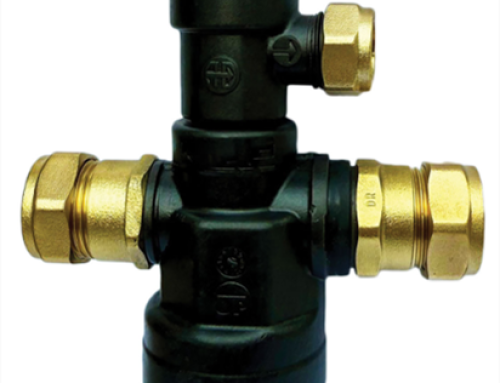
Rainwater harvesting components. Image supplied by Africa Tanks
The demand for rainwater harvesting solutions is rising. More clients are choosing to put some sort of water collection solution into place, and this demand for water tanks has risen steadily over the past two years.
Mzwakhe Mntambo, Managing Director at Burgess Plumbing, has watched this growth. “More people are harvesting rainwater” he says. “It is a more affordable option compared to drilling a borehole. The water is easy to access as it comes straight off your roof.” Clients are always looking for ways to save a little money, and that’s just one reason they opt for rainwater harvesting.
“Think about it,” says Steve van Zyl, National Technical Manager at IOPSA, “rainwater is free water. Instead of losing the water as runoff, you can utilise it.” Van Zyl is a fan of rainwater harvesting and has implemented solutions at his own home. He believes that if enough people get involved with harvesting rainwater, it might take pressure off during times of excessive rain and flooding, and perhaps even mitigate the effects of river floods and overflows.
In addition, rainwater harvesting supplies some kind of non-drinkable back up water while municipalities work on improving service delivery. The question is, where do you begin? According to Mntambo, it starts with practical application. “We begin by asking the client what specifically they want to use the harvested water for” he says. “That will guide us with what we can do. Then we talk about the available options, the placement of the tank and even the colour of the tank.”
This is where the available space on the property also comes into play. “One of the biggest challenges is space and positioning” he says. “Sometimes what is practical for the space and what the client wants can be misaligned, so we have to guide them in that respect.” An area’s rainfall is also an important point to consider at the beginning of the process. This would also provide a guideline for how many tanks may be required: areas that get generous rainfall could see the client installing multiple tanks, while drier areas may need fewer tanks.
Van Zyl recommends that once you have worked out what kind of rainfall your area gets, you can work out what kind of tank space you need. He recommends multiplying the square meterage of the roof where the tank is placed, in order to find how much water could be harvested in litres.
What does rainwater harvesting involve?
First, let’s begin with the difference between rainwater harvesting and water recycling. Penny Bowren from Africa Tanks sums it up perfectly: “Rainwater harvesting involves collecting rainwater from rooftops and surfaces, filtering it to remove debris and storing it in tanks for later use in various applications, including irrigation and non-potable water needs. Water recycling focuses on treating and re-using water for purposes like landscape irrigation, industrial processes and to be used for toilet flushing, after it undergoes purification.”
Essentially, rainwater harvesting comprises a system of tanks that capture and filter water runoff – usually from a surface such as a roof. What kind of tanks, exactly? This is entirely dependent on what the client plans to do with the stored water, and whether they want the system to look as aesthetically pleasing as possible.
“The choice of tanks for rainwater harvesting and storage should primarily be determined by the specific requirements of the project rather than whether it’s for domestic, office or industrial use,” says Bowren. “What is key, is to assess the demand for water, the available collection surface area, the intended water usage – whether it’s for irrigation, toilet flushing, industrial processes or even potable use – the local climate and available installation space.”
Van Zyl points out that there are different kinds of tanks available, some of which are made from plastic. “I can’t say this enough: tanks need to be SABS approved and conform to relevant test standards,” he says, “And it’s important to get it installed by a competent plumber with experience in rainwater harvesting systems.”
There are several components to these systems.

Leaf catcher filter. Image supplied by Plumbing Africa
A filter called a rain head or more commonly, a leaf catcher, will be attached to the gutter. It looks a lot like a sieve and it catches large debris such as leaves, stones and that old tennis ball that got stuck on the roof. This filter is angled slightly, capitalising on gravity to help divert the debris from the water which now flows into the storage tank. The filter can be detached, and the debris discarded.
This is the first step in the filtration system. From there, the water travels down a pipe, into a second filtration system which deals with the smaller particles of debris. This filter is part of the pipe system that leads into the tank itself. From there, the water is moved into the tank where it is kept for future use.
Prior to using the water, the first rain is considered to be the “first flush”. This is usually the water that contains the highest amount of debris. Water from the next and following rainfalls can then be used. This all sounds easy enough – so why not just store the water without all the stress of filters? Simply because as the debris collects, sediment will form and clog up the water tank’s pump. Not only is this going to be more expensive in the long run for the client as they will be continuously sorting out the tank’s pump, it also makes no sense to store unclean water.
If you spot something like this at the home of a client, it would be a great opportunity to talk to them about responsible water saving. It may be a case of not knowing any better when they installed it themselves, or the person who installed the system may have not known the exact ins-and-outs of a rainwater harvesting system.
When all this filtering and so on is done, the water can be used. Most often systems like these are used for irrigation and cleaning hard surfaces like paving. It can also be used to flush toilets. This water, however, cannot be connected to municipal water as back flow prevention may be below par and create a health risk. Importantly, while it is cleared of a great deal of debris, this water is not drinkable.
Van Zyl says, “This harvested rainwater still contains contaminants, making it unsafe to consume – things like iron and rust, depending on the roof’s substrate. Bacteria, perhaps. Safety must always come first. You are required to put up warning stickers at every tap point to make people aware that the water is not drinkable. There is some pretty serious filtration systems available to treat that water so that it is drinkable.”
What do you do about the insects?
This is a big question, because we all know that standing water can easily become an ecosystem. Mosquitos are the first insects that come to mind, however there are many water creatures who would be very happy to set up home in or around your water storage tank.
A little cage called a mozzie screen, that catches insects, can be fitted to the bottom of inlet pipes on the tank. This is an excellent control to put into place to prevent water from being contaminated.

Installed domestic water tank. Image supplied by Africa Tanks
Don’t forget the gutters!
Gutters are often overlooked when it comes to rainwater harvesting. Ideally, these should be slightly angled to assist with waterflow. Water travels down the gutters and into the storage system, which means it is vital to keep the gutters clean to allow for free flow of water.
A clog of leaves can be a pain when it comes to rainwater harvesting, not just because it impedes the flow of water, but also because it can create a breeding ground for bacteria, fungi and other contaminants. The best course of action here is to ensure that gutters are regularly cleaned.
The material that makes up the guttering is also important. PVC guttering is recommended. Many metal gutters – and especially if they have been painted – pose hazards with paint and metals leaching into the water runoff.
Rainwater harvesting is a smart business move
“As plumbers, this should be added to your basket of offerings to consumers,” says van Zyl.
Bowren stands firmly behind this idea. She says, “It has always been our strong recommendation that customers engage qualified plumbers when installing their rainwater harvesting system. This ensures precise installation that aligns with the manufacturer’s instructions and guidelines, to maintain compliance and potential of voiding warranties.”
A system that is correctly installed, with compliant products and the manufacturer’s input, will go a long way in ensuring the system’s longevity. It is an investment, after all.
Making stored water potable is not an impossible dream and will be covered in more detail in our March issue when we look at various water purification options. It involves a little more elbow grease and cost. And some pretty serious filtration.
| Polyethylene storage tanks for water and chemicals
In SANS 1731:2017, paragraphs 4.10.1 and 4.10.2 address materials in contact with drinking water and food. Naturally, the material that the tanks are made out of matters. The materials that are used to make the tanks must not pose a toxic hazard, promote the growth of microbes, give the food or water an unpleasant taste or odour or discolour the food or water. Materials and chemicals should not leach into drinking water and food. Be sure that all tanks installed meet the SANS 1731:2017 stipulations. |