Compiled by Megan O’Connor, with technical input by Marius Atterbury, FPASA, and Sean Okhuysen, FFETA
This month, we dive into the plumber’s responsibilities in terms of fire installation and fire protection, as laid out in SANS 10400-T and SANS 10400-W.

Incorrect installation and non-compliant products can have fatal consequences in fire systems.
The role of the plumber in terms of fire protection and fire installation lies in the integrity of the water
supply – not in fire engineering or system performance. However, failure to install fire water pipework correctly can have fatal consequences, placing plumbers at legal and financial risk if they exceed their scope or ignore approved specifications and standards.
Fire protection equipment and the plumber
Effectively, any fire product that water flows through for the purpose of trying to control or extinguish fires falls under the scope of being a plumbing installation. These include fire hose reels and fire hydrants, which will be the focus of this feature.
SANS 10400-T, 4.34 Hose reels states:
- Hose reels shall be installed in any building of two or more storeys in height or in any single-storey building of more than 250m2in floor area, at a rate of one hose reel for every 500m2 or part thereof of floor area in any story
- Hose reels must comply with requirements in SANS 543, be installed in accordance with SANS 10105-1 and SANS 10400-W, and maintained in accordance with the requirements in SANS 1475-2
- Any hose reel installed must be positioned to ensure that the end of the hose will reach any point in the area to be protected
- Any hose reel installed in any building must have a certification mark from an accredited certification body facing the user
SANS 10400-T, 4.35 Hydrants states:
- Hydrants must be provided at a rate of not fewer than one per 1 000m2or part thereof of total floor area, and not fewer than one per storey located in the firemen’s lift lobby in such building or occupancy, or emergency stairway where no firemen’s lift is provided, as the case might be, and shall be distributed in such a manner that the fire hose referred can reach to every part of the relevant area
- Hydrants shall, where required by the local authority, be provided with an appropriate fire hydrant hose of 24m or 30m in length, together with couplings and a 16mm internal diameter nozzle, all of which should comply with the requirements of SANS 1128-2
- A hydrant shall comply with SANS 1128-2
- The plumber’s responsibility in the fire installation depends on the size of the development. In smaller installations with a smaller team, the plumber may be responsible for determining the pipe sizing, pipe length and calculations as laid out in SANS 10400-W, as well as product selection and installation of the system. For bigger developments, fire engineers or fire consulting companies may be employed. In this case, the appointed entity with credentials will do the calculations, and the plumber is responsible for executing the plan put in front of them.
Fire installation
SANS 10400-W, 3.8 refers to a fire installation as ‘any water installation which conveys water for the purpose of fire-fighting’. SANS 10400-W, 4.1 lays out the general requirements of a fire installation:
4.1 The functional regulations W3 contains in part W of the Nationals Building Regulations shall be deemed to be satisfied where:
-
- fire installations comply with the requirements of 4.2 (communication pipe), 4.3 (water meter), 4.4 (isolating valves) and 4.5 (fire pump connections),
Fire protection equipment and the plumber
Effectively, any fire product that water flows through for the purpose of trying to control or extinguish fires falls under the scope of being a plumbing installation. These include fire hose reels and fire hydrants, which will be the focus of this feature
SANS 10400-T, 4.34 Hose reels states:
- Hose reels shall be installed in any building of two or more storeys in height or in any single-storey building of more than 250m2in floor area, at a rate of one hose reel for every 500m2 or part thereof of floor area in any story
- Hose reels must comply with requirements in SANS 543, be installed in accordance with SANS 10105-1 and SANS 10400-W, and maintained in accordance with the requirements in SANS 1475-2
- Any hose reel installed must be positioned to ensure that the end of the hose will reach any point in the area to be protected
- Any hose reel installed in any building must have a certification mark from an accredited certification body facing the user SANS 10400-T, 4.35 Hydrants states:
- Hydrants must be provided at a rate of not fewer than one per 1 000m2or part thereof of total floor area, and not fewer than one per storey located in the firemen’s lift lobby in such building or occupancy, or emergency stairway where no firemen’s lift is provided, as the case might be, and shall be distributed in such a manner that the fire hose referred can reach to every part of the relevant area
- Hydrants shall, where required by the local authority, be provided with an appropriate fire hydrant hose of 24m or 30m in length, together with couplings and a 16mm internal diameter nozzle, all of which should comply with the requirements of SANS 1128-2
- A hydrant shall comply with SANS 1128-2
The plumber’s responsibility in the fire installation depends on the size of the development. In smaller installations with a smaller team, the plumber may be responsible for determining the pipe sizing, pipe length and calculations as laid out in SANS 10400-W, as well as product selection and installation of the system. For bigger developments, fire engineers or fire consulting companies may be employed. In this case, the appointed entity with credentials will do the calculations, and the plumber is responsible for executing the plan put in front of them.
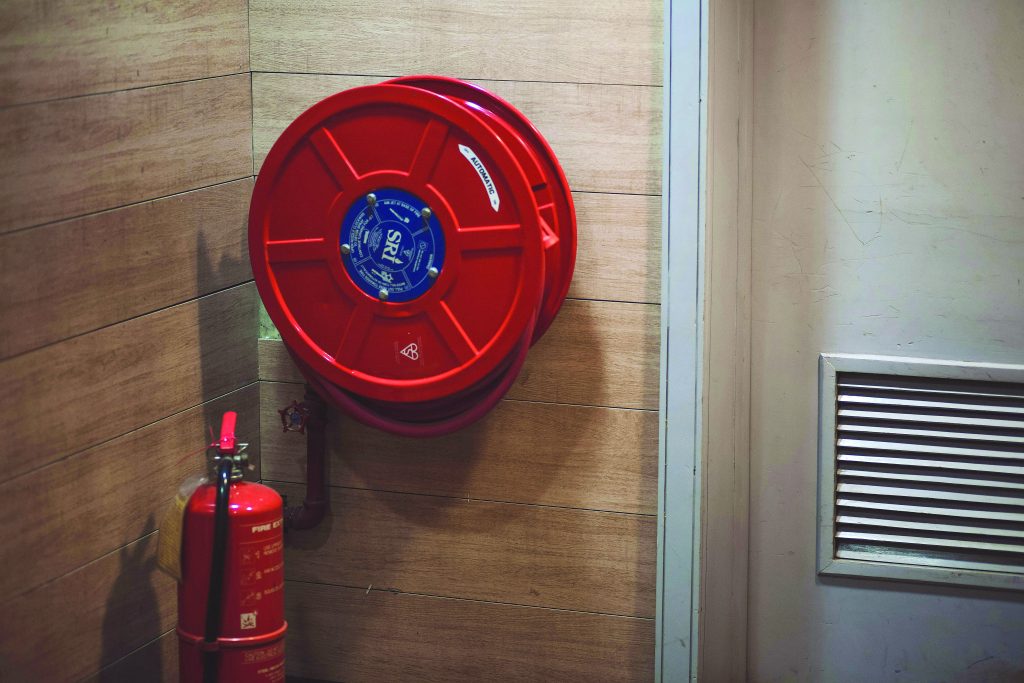
SANS 10400-W, 3.8 refers to a fire installation as “any water installation which conveys water for the purpose of fire-fighting”.
Fire installation
SANS 10400-W, 3.8 refers to a fire installation as ‘any water installation which conveys water for the purpose of fire-fighting’. SANS 10400-W, 4.1 lays out the general requirements of a fire installation:
4.1 The functional regulations W3 contains in part W of the Nationals Building Regulations shall be deemed to be satisfied where:
a) fire installations comply with the requirements of 4.2 (communication pipe), 4.3 (water meter), 4.4 (isolating valves) and 4.5 (fire pump connections),
b) a supply of water is provided in each division for the effective operation of the number of hose reels, hydrants and sprinkler heads that are required in accordance with SANS 10400-T and which may be operated or come into operation simultaneously, and
| ! Always take the manufacturer’s requirements or recommendations into consideration before doing any work with the fire equipment, and verify the manufactured products meets the requirements on site. |
| ! Refer to by laws as each municipality has their own hydrants that are required for use and installation, which you must confirm prior to installation. |
c) the fire installation is either
- the subject of a rational design prepared by a competent person (wet services) or a competent person (fire engineering) in accordance with the general principles and requirements contained in SANS 10252-1 and, if relevant, SANS 10287, or
- in accordance with the requirements of 4.6 where the area in which the building is located is serviced by a fire brigade, contains no sprinkler system, and serves not more than three fire hydrants in a division.
Risks and liability
- Fire technicians only come in after a hydrant is installed, before then it is the plumbers who can be held liable and at risk
- Insurance claims for fire-related damage can sometimes be repudiated depending on the policy For example, if a business has cover that states their fire equipment must be installed in a certain way that the plumber does not adhere to and the fire department is unable to use the equipment to extinguish the fire, the insurance company could opt to repudiate the claim.
- Legal action could be faced if the cause of failure of the system is due to the work done by the plumber
- Long-term liability after handover could be faced by plumbers if they chose and installed non-compliant products or do not install the system correctly.
Common installation mistakes
One of the most common installation mistakes in fire systems, according to Marius Atterbury, FPASA, is incorrect pipe sizing. Think of a fire installation as a system – this system requires big pipes at the start, which lead into smaller pipes that extinguish or control the fire. If one part of the system is incorrect, the whole system is affected. Sean Okhuysen, FFETA, provides this example of an oak tree: as the main pipe (the trunk as the biggest) has pipes that branch off to smaller areas, then the pipe sizes can get smaller; but there is a limit to how small – you cannot have a small branch supporting a massive trunk, just like you cannot have a small pipe supporting a larger network.
SANS 10400-W 4.6: Pipework4.6.1 In any fire installation
NOTE: SANS 10252 has piping sizes, and highlights that when pipes exceed a certain distance then they become larger than what is indicated above. |
Okhyusen emphasises another small installation mistake that plumbers can make, which involves installing hose reels without the required union, or installing the CP valve of the hose reel in the wrong direction.
| SANS 10400-W 4.5: Fire pump connections
4.5.1 In any fire installation
2 500kPa and a non-return valve so located as to shut off automatically the direct supply of water from the local authority system to such installation whenever and for so long as any such fire pump connection is in use. NOTE: It is not necessary to provide a pumping connection to any pipe serving only hose reels. 4.5.2 states that any pumping connection must be situated outside the building at ground level in a readily accessible position, mounted on the face of the building in an accessible position, and clearly marked as such. |
Another common installation mistake is the use of non-compliant products: “If you consider that we’re in a country that’s supposed to be well regulated, the approved equipment should go in. But at times, you do run into situations where people were able to put in unapproved equipment,” says Atterbury. Although it is ultimately the building owner who is responsible for the equipment chosen for installation, the plumber should be able to advise them which products are compliant. The plumber in the installation can also be left with the responsibility to choose the equipment – the biggest compliance gaps by plumbers in fire installations are not actually about the installation itself, but rather in sub-standard products
being used. For example, there are hydrants being imported that do not meet the 1 200ℓ/m requirement at 3 bar and the plumber will not be able to verify this requirement. They will however be involved in the liability if they are found to have procured and installed sub- standard products.
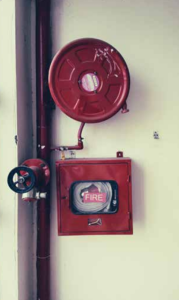
The role of the plumber in terms of fire protection and fire installation lies in the integrity of the water supply. Phenomenal Clicks | Pexels
Most common causes of failure of fire systems
The most common cause of failure is most certainly a lack of maintenance. Fire systems do need to be maintained – consider the infrastructure of South Africa, with leaking pipes and unreliable water systems, fire equipment systems can be left vulnerable if they are not correctly maintained. So, the plumber is responsible for ensuring that the piping system of private properties are in working order: “Once through the gate, that private infrastructure also needs to be taken care of” emphasises Atterbury.
Maintaining fire equipment
Maintenance is done annually in accordance with SANS 1475 by approved fire technicians; however the owner is responsible in SANS 10105 for the monthly inspection of fire equipment. The
owner can nominate somebody to do this on their behalf – such as a safety officer, fire technician or even a plumber with knowledge of equipment, as long as the inspection and maintenance is being done, and done correctly in accordance with the standards. Neglecting maintenance can lead to property damage and loss of stock (in businesses).
What the general plumber CAN do |
What the general plumber CANNOT do |
| Install fire water pipework | Design fire systems |
| Connect hydrant feeds | Determine hydrant spacing |
| Install isolation valves | Commission fire systems |
| Pressure test pipes | Certify fire compliance |
| Follow approved drawings | Deviate from the design plan without approval |
The scope of the plumber in a fire equipment installation.
Atterbury’s advice to plumbersVerify, verify, verify. The verification role that a plumber uses cannot be overlooked.
|
Register for free to gain access the digital library for Plumbing Africa publications