By Chris Coetzee, OHSS Consulting
For decades, the South African plumber’s relationship with the ‘roof space’ was predictable: fix a leak, replace a thermostat or swap out a standard 150ℓ electric geyser. But as the energy crisis deepened, the landscape changed.

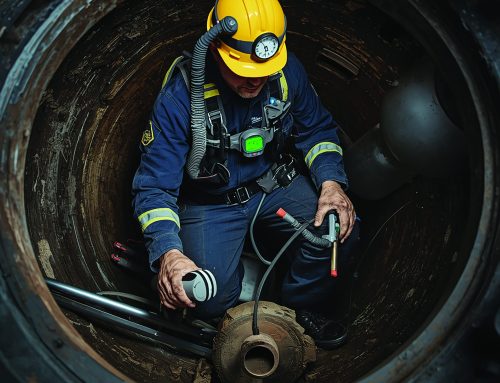
Plumbers are no longer just ‘water men’, they are high-pressure technicians working in high-risk environments. Supplied by IOPSA
Today, the ceiling is a high-tech utility room. With the mass rollout of Solar Water Heating (SWH) systems and heat pumps, plumbers are no longer just ‘water men’, they are high-pressure technicians working in high-risk environments. This article explores why the modern geyser installation is a frontline OHS challenge.
The physics of danger: High pressure and super-heated steam
Under the Pressure Equipment Regulations (PER) of the OHS Act, any equipment operating at a pressure equal to or greater than 50kPa falls under strict safety mandates. A standard geyser operates far above this.
- The steam explosion risk: When a T&P (Temperature and Pressure) valve fails on a solar system, the water doesn’t just boil; it can become super-heated. In a closed-loop system, if the pressure isn’t relieved, a geyser can effectively become a
- Technical safety: Plumbers must ensure that SANS 10254 (installation of fixed electric storage water heating systems) is followed to the This isn’t just ‘compliance’, it’s life insurance.
Structural integrity: The weight of the ‘green’ transition
A standard 200ℓ geyser weighs about 250kg when full. A solar system adds the weight of the collector panels and the additional bracing.
Many South African homes, particularly older builds or RDP housing, were never designed to hold this localised weight on the trusses.
- The hazard: Structural collapse during or after
- The safety fix: A pre-installation structural assessment is now an OHS Plumbers must be trained to identify rotting trusses or insufficient load-bearing walls before they hoist a tank into the dark.
The ‘solar burn’ and DC electricity
Solar plumbing introduces two new hazards: Thermal shock and DC arcing.
- Thermal shock: Solar collectors can reach temperatures well over 100°C. Touching a dry-run pipe or being sprayed by a pressure release can cause third-degree burns instantly.
- The electrical cross-over: Many plumbers are now handling PV-ready While they aren’t electricians, they work in proximity to DC wiring from panels. Under the OHS Act, ‘Safety in the vicinity of electricity’ is a core requirement. If you aren’t sure if a wire is live or what the DC voltage is, don’t touch the pipe.
Working at heights and in confined heat
The South African sun turns a ceiling into an oven.
- Heat exhaustion: In a 40°C Gauteng or Karoo summer, the temperature in a roof can hit 60°C. This leads to impaired judgment and fainting, deadly when you are balanced on a
- The fall protection plan: SANS 10106 requires specific safety measures for solar If you are on the roof, you need a harness. If you are in the ceiling, you need a headlamp, a respirator for glass-wool insulation, and a ‘spotter’ outside.
Conclusion: The professional standard
Plumbing was never a ‘low-skill’ trade, and today it is a high-stakes engineering task. By adhering to the OHS Act and SANS standards, you aren’t just avoiding a fine from the Department of Labour; you are ensuring that the ‘green revolution’ doesn’t come at the cost of a plumber’s life.
Register for free to gain access the digital library for Plumbing Africa publications