Compiled by Megan O’Connor, with technical input from Ground 2 Tap Water Solutions
In June 2025, Ground 2 Tap Water Solutions approached a hotel and wine estate in Brackenfell, Cape Town after identifying it as a strong candidate for both water security and financial savings, through innovative water solutions.
All images supplied by Ground 2 Tap
The project was completed at a large hotel and wine estate located in Brackenfell. The estate includes hospitality, accommodation, irrigation and operational facilities, all of which place significant demand on water reliability and quality.
The brief
Before the project, the estate already had multiple boreholes on site being used primarily for irrigation, but the property was still heavily reliant on municipal water for its operational and potable water needs. The estate also had an existing water treatment plant on site. However, this system had not operated correctly for several years and was no longer fit for purpose.
After assessment, it became clear that refurbishing or repairing the existing plant would not deliver a reliable or compliant outcome.
Ground 2 Tap’s recommendation was therefore to mothball the existing system entirely and design a new, purpose-built treatment solution aligned with the estate’s long-term operational needs.
The purpose
Through the upgrade, the client hoped to achieve three things:
- Financial savings: reducing municipal water consumption was a key driver, with a clear focus on lowering long-term operating costs.
- Security of supply: with ongoing concerns around drought conditions in the Western Cape, the estate wanted to ensure continuity of water supply without reliance on municipal
- Long-term water quality and consistency: as a hospitality-driven environment, consistent, high-quality water was essential for guest experience, infrastructure protection and operational
Based on existing geohydrologist yield tests and water quality reports, the engineers confirmed that the estate’s borehole infrastructure
had sufficient capacity to support these goals – allowing them to design a solution that could take the estate fully off-grid from a water perspective.
The installation – from start to finish
The entire project duration from concept to handover was around eight weeks – with the design and planning phase taking around six weeks, and on-site installation and commissioning taking around two weeks.
The project began with a detailed site inspection and system mapping phase – including reviewing existing site drawings, identifying
the full pipe network across the estate, locating interchange and isolation valves, and understanding how water flowed between storage, treatment and distribution points. Also assessed were power availability, existing clean water storage and potential discharge points for backwash water. In this case, the system was designed so that all back-wash water could be reused for irrigation, meaning there was effectively no wastewater generated by the treatment process.
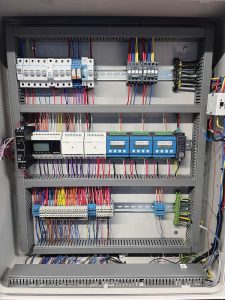
Once the concept was refined and approved, the project was handed from the proposals team to the engineering team. The system 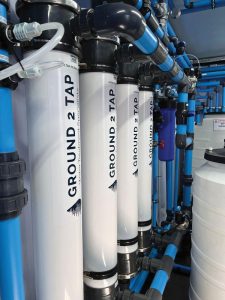
was fully engineered – including CAD layouts, detailed P&IDs and control logic schematics. The final design was a containerised water treatment plant, allowing the entire system to be built, tested and commissioned off-site. The container housed all major treatment processes, pipework, instrumentation and automation.
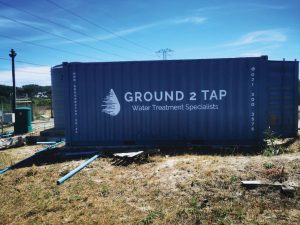
Once fabrication was complete, the containerised plant was delivered to site and connected to the estate’s existing borehole supply, storage tanks and internal distribution network. This approach significantly reduced on-site disruption and ensured predictable quality control.
After installation, the system underwent full commissioning, testing and optimisation. Ongoing performance tuning is now handled remotely via Ground 2 Tap’s monitoring platform, with proactive adjustments made as operating conditions change.
The new system – water treatment and automation
The treatment process was specifically designed around the site’s raw water characteristics, which included high iron levels and elevated salinity (brackish water).
The system operates in multiple stages:
- First, the raw borehole water is chemically Iron removal requires precise control of both pH and oxidation potential. Sodium hypochlorite is used as an oxidant to convert dissolved iron into a solid form, preparing it for filtration.
- Second, the water passes through a dedicated iron removal media filter, which removes the bulk of the oxidised iron.

- Third, an ultrafiltration (UF) stage polishes the water by removing remaining fine sediment and iron particles.
- Finally, the water is treated through nanofiltration (NF), which removes excess salinity and unwanted dissolved minerals. The system is carefully tuned to achieve a stable, balanced water profile without the need for remineralisation.
Further, the new system also includes:
- Full remote monitoring of system health, performance, water production and operational savings
- Automated chemical level monitoring and proactive service scheduling
- Automatic changeover between treated borehole water and municipal supply, ensuring zero downtime for the estate
- Precise control over final water quality to protect infrastructure and ensure consistent supply to buildings
The challenges of the project
One of the main challenges occurred just before installation, when a critical borehole pump failed. This borehole was originally intended to feed the treatment plant. An alternative borehole to supply the system was identified, however its yield was lower than originally planned.
Borehole specialists were brought in to adjust the variable speed drives on the pumps to increase output and align production with the treatment plant’s capacity. 
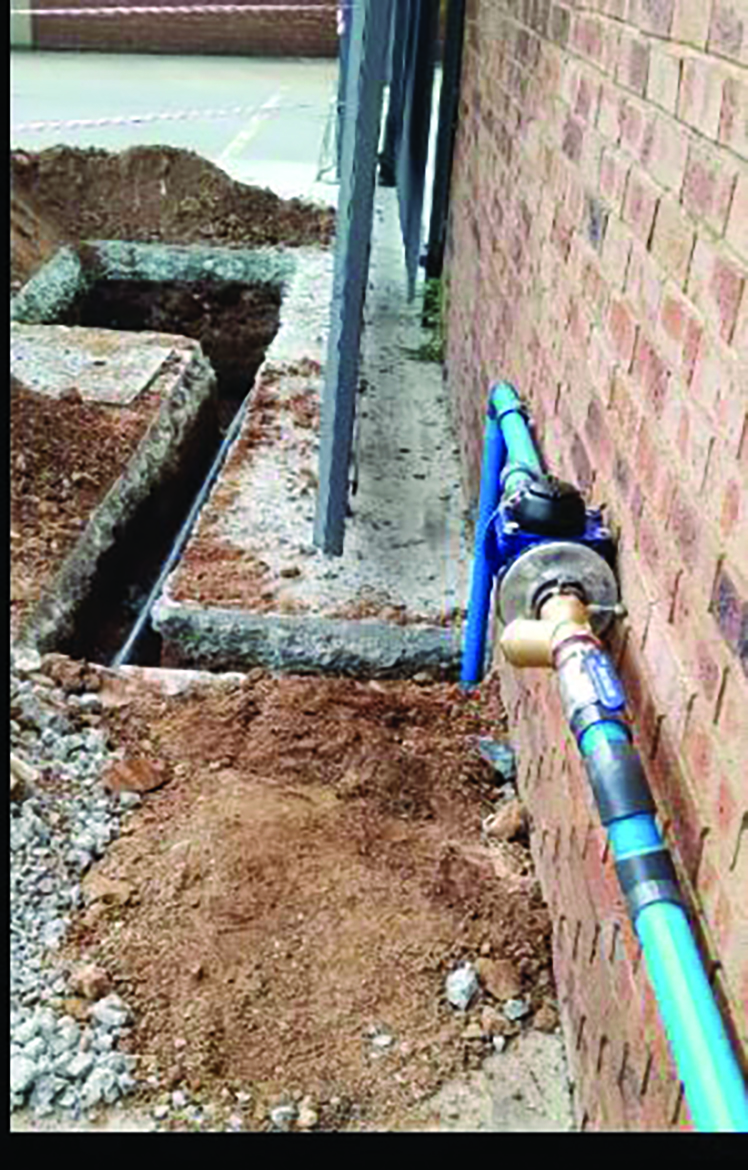
Another challenge involved the automatic municipal changeover system: Due to the distance between the treatment plant and the existing municipal connection, running long electrical control cables for motorised valves was impractical. Instead, a Bermad pressure- sustaining valve was installed, and this valve automatically detects low pressure from the treatment system and opens the municipal supply. Once treatment pressure is restored, the municipal supply is automatically isolated again. This solution provided a robust, fail-safe changeover without complex electrical infrastructure.
| Client | Hotel and wine estate, in Brackenfell, Cape Town |
| Engineer, main contractor, and plumbing contractor | Ground 2 Tap waater treatment specialists |
| Suppliers | Ground 2 Tap waater treatment specialists |
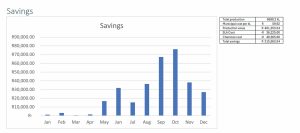
An overview of the financial savings since the installation in June 2025, due to the off-the-grid water solutions.

Additional perspectives of the container.
The digital systemThe installation also included a digital monitoring platform, which provides full visibility of the system to the client, including:
In addition, historical data is logged and converted into reports, allowing the client to understand trends, savings and performance over time, while Ground 2 Tap proactively manages optimisation and maintenance. |

View of the monitoring board.
Register for free to gain access the digital library for Plumbing Africa publications