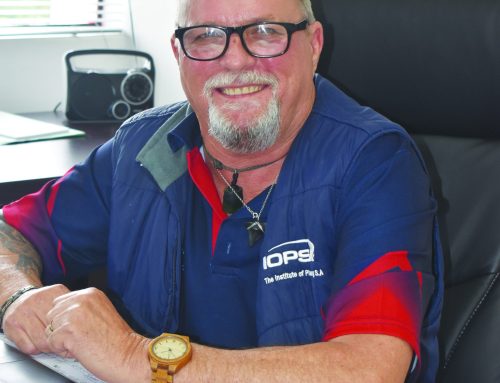
By Rob Burger, small business finance and strategy consultant, 2XR Business Solutions
Does a small plumbing business really need a budget?
Most owners will tell you no. Work comes in, cash comes in, bills get paid. Job done. For a while, that works. When jobs are steady and customers pay on time, it feels like the business is running itself. But that’s usually when the cracks are forming.
One quiet month, one late-paying client, or one unexpected expense like replacing tools or fixing a vehicle, and suddenly cash is tight. Not because the business is failing, but because there was no plan behind the numbers.
So yes, even a small plumbing business needs a budget. Not a complicated one filled with finance terms. Just a clear, practical view of how money flows in and out of the business.
Start with the basics
You only need to understand three numbers.
First is revenue – what you earn. How many jobs do you complete in a week, and what do you charge on average? If you’re doing around 20 jobs a week at R800 per job, that’s R16 000 a week or roughly R64 000 a month. That’s your starting point.
Second is direct costs. These are the costs that move with your work, such as materials, parts and any subcontractors you bring in. The more work you do, the higher these costs go.
Third is overheads. These are the costs of keeping the business running regardless of how busy you are. Fuel, vehicle repayments, tools, insurance, phone and admin all sit here. Once you understand these three numbers, you already have more control than most small operators.
Turn this into a simple monthly budget
Take your expected jobs and multiply by your average price to estimate income. Then list your expenses as honestly as possible: materials linked to your jobs, fuel and transport, wages if you have staff, tools and maintenance, insurance and your day-to-day admin costs. Subtract your total expenses from your income. If there is money left, that is your operating profit. If there isn’t, then something needs to change. Either you increase your prices, take on more work, or reduce your costs. There are no other options.
Common mistakes
Most small businesses get caught by costs that don’t happen every month. Tool replacements, vehicle repairs, licence renewals and December slowdowns are all predictable, yet often ignored. Add them up for the year, divide by 12, and set that aside monthly. It’s simple, but it keeps you stable instead of scrambling when these costs hit.
Another mistake is focusing on profit and ignoring cash flow. You can be profitable on paper and still run out of cash. Customers pay late, materials need to be bought upfront, and expenses don’t wait. Timing matters. You need to know what cash is coming in this month, what must go out and what might be delayed. If you don’t manage that timing, the numbers won’t protect you.
Keep it practical
You don’t need accounting software to get this right – an A4 notebook will do the job. Give each month its own page and write it down as it happens. If you do have access to a computer, then a simple spreadsheet is cleaner and easier to track.
Set it up with two columns: one for your expected income and one for your expenses. The difference between the two tells you straight away if you are over or under budget. Then update it properly as the month progresses. Don’t guess. Use your bank statements to track what actually came in and what went out and keep your expense slips filed by month, so nothing gets missed.
Do this consistently and the numbers will start to make sense. Your estimates will tighten up, and your decisions will be based on facts, not assumptions.
The point of budgeting is not control for the sake of control. It’s about knowing when you can afford to hire someone, when to increase your prices, and when to walk away from low-margin work. It gives you confidence because you understand your numbers, not because you hope things will work out.
If you can manage your monthly cash flow and plan for your annual costs, you are already ahead of most small businesses.
Keep it simple, keep it honest, and stick to it.
| About the author:
Rob Burger CA(SA) is a finance and strategy consultant who helps small businesses, contractors and professionals simplify their finances and grow sustainably. He has 30 years of experience in business and now focuses on helping SMEs build stronger, more profitable enterprises. Email robburger@2xrconsulting.co.za, or contact +27 (0) 61 588 0497. |
 Supplied by Rob Burger |