Compiled by Megan O’Connor, with technical input from Piet Posthumus and Kevin Ebersohn (SATAS), Patrick Gordon (Splashworks), Justin Marsberg and Kelli Marsberg (CEISLAB SA), and Trevor Westman (JASWIC)
Choosing the correct product to use can prove difficult when the words ‘accepted’, ‘certified’ and ‘accredited’ are mentioned. In this feature, we break down these words and what they mean to you as the plumber.
Ultimately, compliance ends in the hands of the plumber, so understanding the certification landscape is not just about ticking boxes; it is about protecting your client, your workmanship and your livelihood. In this feature article, we will break down the meanings of these three big words, the risks of installing non-compliant products, and your role in the accreditation, certification and acceptance conversation.
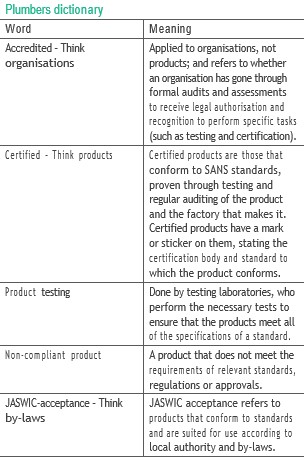
Simply put, accreditation confirms the competence of the certifier, certification confirms the compliance of the product, and acceptance (JASWIC) refers to products that conform to standards and are suited for use according to local authority and by-laws.
Accreditation
Accreditation does not apply to products directly, but it is the foundation that allows plumbers to trust certification marks.
Accreditation simply means whether a facility has been given international approval by an accreditation body to test and/or certify products. So, “accreditation applies to organisations, not products,” says Justin Marsberg, general manager of CEISLAB SA, and therefore, an “accredited organisation has gone through formal audits and assessments to receive legal authorisation and recognition to perform specific tasks (such as testing and certification)”.
In South Africa, the only organisation that can accredit test houses or certification bodies is the South African National Accreditation System (SANAS), as per the National Accreditation Act. Patrick Gordon stresses to think of accreditation as a “formal relationship/ contract with the certification body or testing house and SANAS”.
Under this contract, the testing house or certification body is agreeing to be audited continually by SANAS to stringent IEC/ISO management system requirements.
Testing houses also need to be SANAS-accredited. “All your test labs should be SANAS accredited, which means that they can test according to the South African National Standards (SANS). Effectively, they will accredit testing houses to specific test methods, proving they have the competency and the equipment to test according to SANS,” says Gordon.
| Want to know if the product you are working with is coming from an accredited certification body?
It is a SANAS requirement that all of the certification bodies that they accredit are listed on the SANAS website, as well as which specifications or test methods they are accredited to. So, if you want to proof-check, simply search for the certification body on www.sanas.co.za This is important because certification bodies are only accredited for those specifications they applied for and does not infer that any specification they certify are ‘accredited’ – i.e. they only have accreditation for some standards. |
Certification
Certification refers to whether a product complies to relevant SANS standards, and whether the manufacturer’s quality management system complies to Certification Conditions defined by Certification Bodies, i.e. ISO specifications.
Currently, there are 17 accredited certification bodies in the country, the main ones of which for plumbing materials are: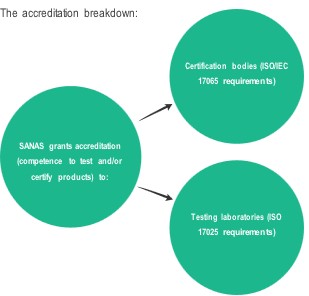
- SABS – South African Bureau of Standards
- SATAS – South African Technical Auditing Services
- SABPS – South African Allbrothers Products and Systems Certification
- SAPCS – South African Product Certification Services
For a product to be certified, a test house performs certain tests on the product and issues a test report that states whether the product has passed or failed. The test report is then used by a certification body to assist in the approvals process to issue formal product certification to the specific product specification.
The product certification journey
- Random samples selected by the certification body are sent to an accredited laboratory for full specification testing.
- The testing laboratory provides a test report, stating whether the product passed or failed. NOTE: A passed test report does not automatically mean that the product is certified – only the certification body can certify the product.
- If a test report passes and factory assessments are successfully conducted, the certifier may then issue a certificate that names the standard and specific range/brands that were tested (so the certificate does not automatically cover other brands, only what was tested).
- Once certified, the manufacturer is then allowed to put a certification mark or sticker on the product, stating which certification body certified the product, as well as which standard it is certified to (for example, SATAS SANS 226).
| Testing versus certification
A test report: Applies only to the sample(s) tested; and does not prove ongoing process control or batch to batch consistency. A certified product/manufacturer: Has gone through regular, rigorous testing plus factory audits; and is backed by a certification body’s decision and mark. Always verify certification marks directly with the certification body. |
For the product to be certified, the factory that manufactures the product must undergo regular audits to verify its production control systems and ability to consistently manufacture compliant products. For manufacturers to be and stay certified, the following happens:
- System audit: The factory is audited on a regular basis to ensure that their documented quality system and process controls are strictly adhered to, which requires demonstration through records that product requirements are consistently achieved.
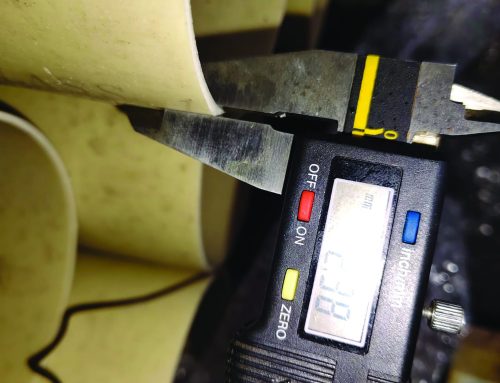
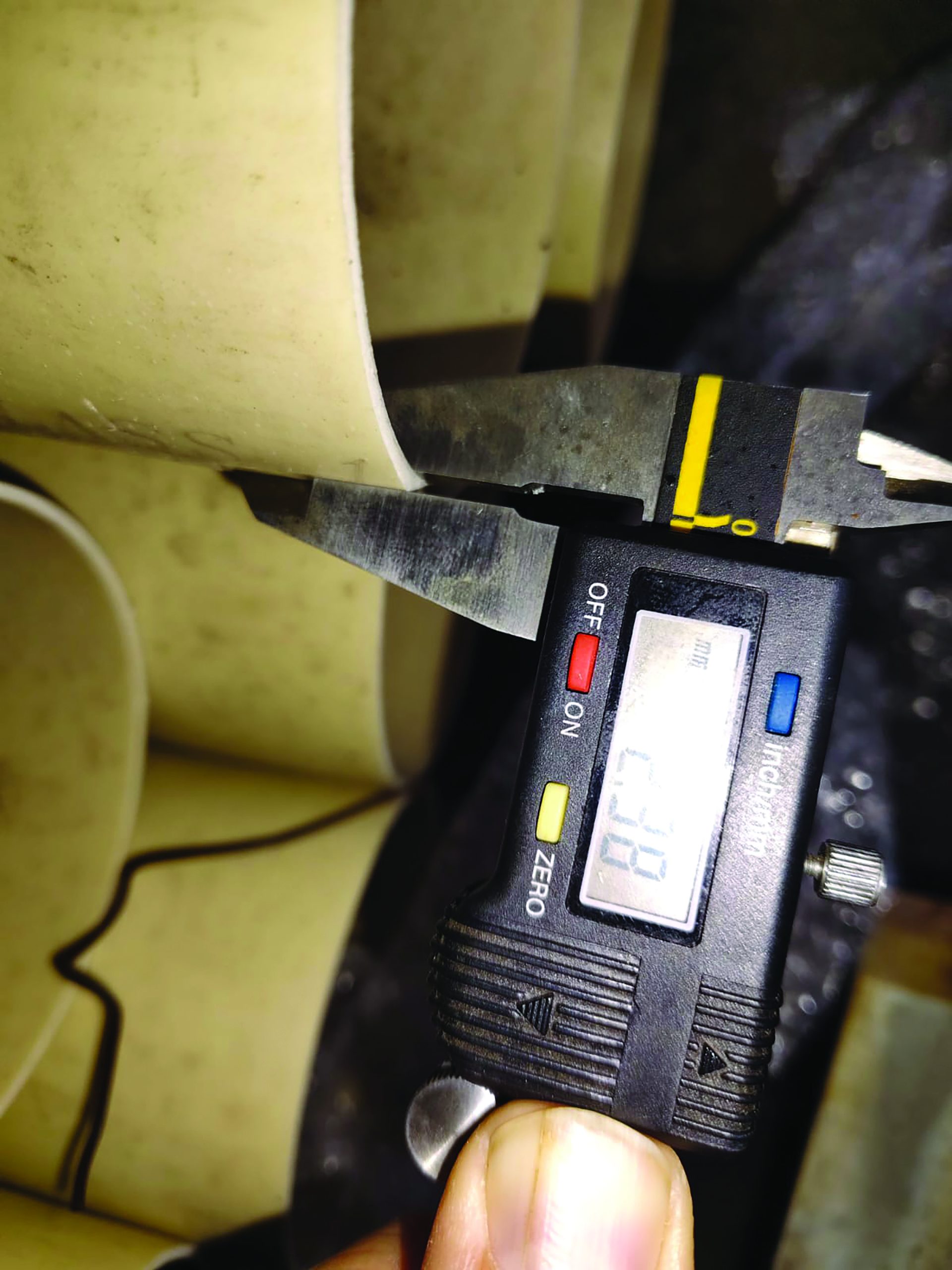
- Product audit: The certifier of the factory performs regular random sampling of products to go for retesting. These visits happen 3–4 times per year, all of which are unannounced. This ensures that ‘golden samples’ aren’t being used – product(s) of a better quality being sent for testing – i.e., the best in the batch.
| The basics
Simply put, what matters for a certified product is an up-to-date certification from a recognised body that clearly ties:
|
Acceptance
Acceptance is done by the Joint Acceptance Scheme for Water Installation Components (JASWIC), which is dedicated to promoting the use of high-quality components in water and sanitation systems. JASWIC’s mission centres on:
- Protection: Ensuring public health, safety and the prevention of water pollution.
- Conservation: Supporting water conservation efforts through reliable infrastructure.
- Efficiency: Fostering co-operation and information exchange between consumers, suppliers and water service providers to improve service delivery.
JASWIC was formed in the early 1980s by water engineers from South Africa’s major municipalities, and it was established to create a unified national acceptance list. The primary goal is to verify that plumbing products comply with relevant SANS. The constitution of South Africa (section 156 and 162) entrusts and authorises the municipalities to administer all aspects of water and sanitation through their Water and Sanitation Bylaws, which also require them to maintain a Schedule of Approved Pipes and Fittings.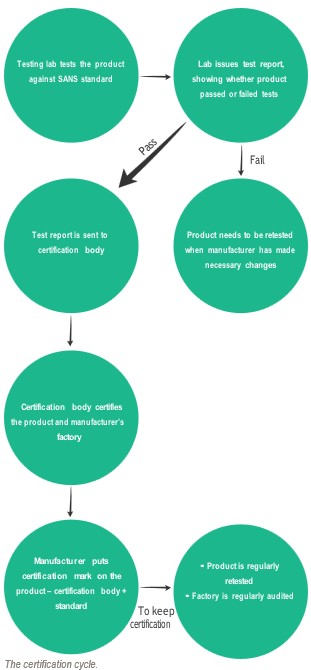
The acceptance process
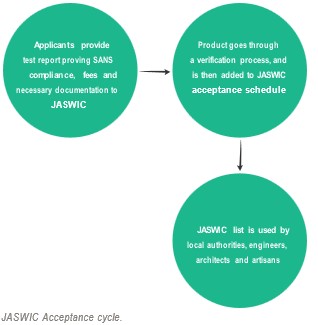
To become JASWIC-accepted, applicants must prove and/or provide:
- Compliance: Applicants must provide a full specification test report from a SANAS-accredited body proving compliance with the applicable SANS standard.
- Documentation: All required documentation and fees must be submitted as outlined on the JASWIC
- Verification: This process ensures that components meet a ‘reasonable standard’ of performance and lifespan, regardless of their country of
- JASWIC certificates are valid for two years from the date of The validity of the certificate and the continued listing of the component(s) on the JASWIC list will be subject to continued compliance with the applicable standard(s). JASWIC may request verification tests to be performed by a SANAS-accredited testing laboratory if deemed necessary to confirm compliance.
Impact on municipalities and industry
JASWIC serves as one of the standards for local government compliance:
- By-law integration: While most water by-laws require materials to be on an ‘approved schedule’, few local authorities maintain their own Instead, they voluntarily subscribe to the JASWIC Acceptance Schedule via direct by-law wording or council resolutions.
- Industry resource: Beyond compliance, the JASWIC list is a vital database used by engineers, architects and artisans to source reliable products for various installations.
The risks of using non-compliant products:
- Breach of the Consumer Protection Act (CPA) – “The CPA requires all goods supplied and installed to be safe, durable and fit for purpose,” emphasises
- Reputation risk – A failure almost always comes back on the plumber, not the
- Financial risk – Unpaid call backs, and possible remediation “At the end of the day, if it’s a comeback, it’s a costly comeback,” stresses SATAS’ Kevin Ebersohn.
- Health and safety risks to the consumer – Scalding and injury to the consumer can
- Long-term risk – Often, problems with non-compliant products only present years later, but the liability remains with whoever installed the non-compliant product.
Kelli Marsberg stresses that the use of compliant products is effectively an insurance-like protection to the plumber. If something were to go wrong somewhere down the line and the plumber made use of compliant and tested products, they have an easier defence under the CPA, as well as a stronger position in insurance and liability disputes.
The plumber’s role
Gordon stresses that plumbers have a role in educating consumers about which products are the best to use, in plain language, as per the CPA.
Remember, the certification bodies are there to help you. Ebersohn emphasises that plumbers should contact certification bodies to ask which products are certified if they are unsure – “We’re all in the same business to ensure compliance and to safeguard the marketplace and the consumer. That’s our primary function, and we would do our utmost to ensure that if a plumber wants to inquire, we are available, and we will gladly assist.”
Words from the wise
 “Ensure that your good work is underpinned with quality compliant products,” Patrick Gordon, technical manager, Splashworks.
“Much like insurance, independent testing and certification may feel like a grudge purchase. But when a product fails, they’re the difference between accountability and costly regret,” Kelli Marsberg, HR manager, CEISLAB SA.
“Ultimately, using compliant products translates to peace of mind for you – knowing that the product is of the highest quality.” Justin Marsberg, general manager, CEISLAB SA.
“Compliant products may cost a few rands more, but end of the day it’s going to be of huge benefit to the plumber and their clients,” Kevin Ebersohn, metallurgical auditor, SATAS.
“It comes down to peace of mind – for the client, and for the end user,” Piet Posthumus, director, SATAS.
| The PA and PTE policy
Plumbing Africa accepts only SANS-approved product advertisers, and Plumbing Travelling Exhibitions (PTE) accepts only SANS-approved exhibitors. Furthermore, any articles published referring to standards and products (such as projects), carry the relevant SANS specifications. |