By Chris Coetzee, health and safety consultant, OHSS
Plumbers may be exposed to enclosures with limited openings such as drains, sewers, tanks and silos as confined spaces. These are often places that are not usually entered by people but may need to be during maintenance work or inspections.

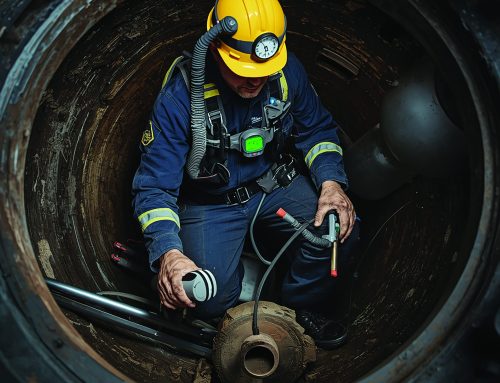
Great care needs to be taken when working in confined spaces. Image by pvproductions on Freepik
During construction work, some areas may become confined spaces due to the work being carried out, for example within trenches, unventilated rooms or building voids. Let’s look at seven hazards that arise.
A ‘confined space’ is defined as an enclosed space which:
- Is large enough and so configured that an employee can enter with their whole body and perform assigned work
- Has limited or restricted means for entry or exit (some examples are tanks, vessels, silos, storage bins, hoppers, vaults, pits and diked areas)
- Is not designed for continuous employee occupancy
A confined space is also defined as having one or more of the following characteristics:
- Contains or has a known potential to contain a hazardous atmosphere
- Contains a material with the potential for engulfment of an entrant
- Has an internal configuration such that an entrant could be trapped or asphyxiated by inwardly converging walls or a floor which slopes downward or tapers to a smaller cross-section
- Contains any other recognised serious safety or health hazards
-
Lack of oxygen
Oxygen can be removed from the atmosphere within a confined space through naturally occurring reactions. A reaction between certain soils and the oxygen, or groundwater and chalk or limestone can produce carbon dioxide which displaces oxygen. Rust forming inside tanks can also create a lack of oxygen.
-
Gases, fumes and vapours
Poisonous gases and fumes can build up within confined spaces, especially where there is a lack of ventilation. Deadly gases can leak into the confined space, for example through a burst gas pipe or from contaminated land. Or they may be created from the work being carried out, such as welding, adhesives or paint fumes. Without extraction or ventilation, these gases and fumes can create a toxic atmosphere within the confined space.
-
Flooding
Liquids can quickly flood the confined space, particularly in drainage or sewer work, trapping and potentially drowning those within. And it’s not just liquids you should worry about. Solids can also flood confined spaces, for example in trench collapses, with those within the trench at the risk of being trapped or buried. Confined spaces can be small, so flooding can occur in a matter of seconds, leaving no time to escape.
-
Dust
Dust can build up within confined spaces, either naturally occurring or through the activity being carried out, such as drilling or grinding. Excessive dust inhalation causes respiratory problems, and hazardous dust can be fatal. Dust build-up can also increase fire/explosion risk, especially where there is a lack of ventilation.
-
Fire and explosions
Flammable vapours, liquids, gases and dust within the confined space can all increase the risk of fire and explosions. The risk is increased further where any hot works or tools which can spark are used within the confined space. Remember how lack of oxygen was number one on our list? Well, too much oxygen is also bad. Excessive oxygen levels increase the risk of fire and explosions.
-
Temperature
Strenuous work, hot work or naturally occurring hot conditions can lead to a dangerous increase in body temperature. This can quickly become a problem within confined spaces that are hard to escape from at the best of times. Heat can rapidly rise due to the enclosed nature of a confined space. This can lead to heatstroke, exhaustion and collapse.
-
Access restrictions
Confined spaces are also dangerous because they can be difficult to access. This makes escape difficult and also hinders any emergency rescue. Once you are inside a confined space, there may not be a quick or easy way out. So, it is important to know that work can be carried out safely before you enter, and emergency arrangements are in place.
What then do plumbers need in order to be safe when working in these dangerous situations? First of all, no plumber should enter a confined space for work if it is reasonably practicable to perform the job without entering. Where there is a presumption or doubt against entry, wherever possible entry should be avoided. Here are the items you should consider when developing a confined space entry programme.
Supervision
The degree of supervision should be based on the risk assessment. The supervisor’s duties are to ensure that:
- The necessary safety precautions are taken
- Anyone in the vicinity of the confined space is informed of the work being done
- If used, the permit-to-work system operates properly
Competence
Competence to work safely in confined spaces requires adequate training and experience in the particular work involved. Ensure that the training provider is registered to provide this specialised type of training.
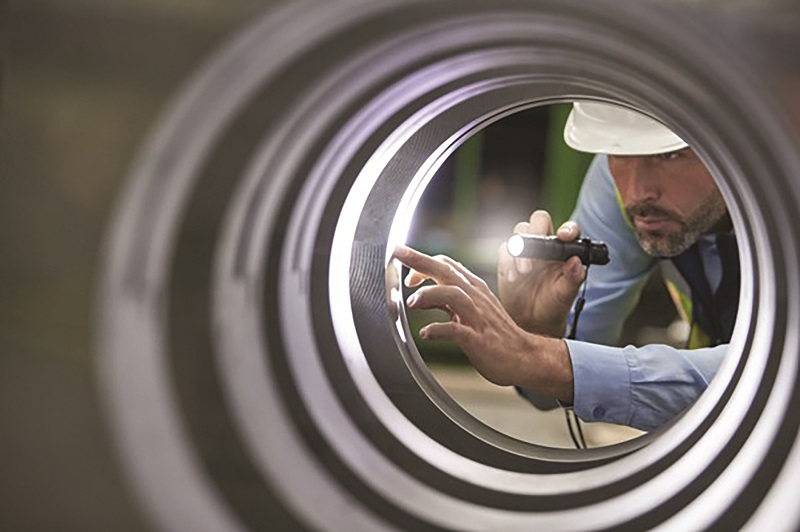
Inspect the space before entering.
Communication
Adequate systems will be needed to ensure effective communication:
- Between those inside the confined space
- Between those inside the confined space and those outside
- To summon help in case of emergency
The impact of breathing apparatus and the possible presence of flammable or explosive atmospheres will be relevant factors in determining the suitability of the communication system.
Testing / monitoring the atmosphere
The atmosphere within a confined space may need testing for hazardous gas, fumes or vapour – or to check the concentration of oxygen prior to entry. Regular monitoring of the atmosphere may also be necessary to check that there is no change in the atmosphere while the work is being carried out. Wherever possible, testing and sampling should be done without entering the confined space.
Gas purging
Where it is believed that flammable or toxic gases or vapours are present there may be a need to purge the gas or vapour from the confined space. This can be done with air or an inert gas where toxic contaminants are present, but with inert gas only for flammable contaminants.
Ventilation
Mechanical ventilation may be required to provide sufficient fresh air to replace the oxygen that is being used up by people working in the space, and to dilute and remove gas, fumes or vapour produced by the work. Fresh air may be blown into the confined space using a fan and trunking, or foul air may be drawn from the confined space if there is an adequate supply of fresh air to replace it. Checks should be made to ensure air supplies are not contaminated. Oxygen should not be used because of the fire / explosion hazards posed by an oxygen enriched environment.
Removal of residues
Hazardous gases, fumes or vapour may be released when residues are disturbed or, particularly, when heat is applied to them. Appropriate control measures might include the use of powered ventilation equipment, specially protected electrical equipment for use in hazardous atmospheres, and respiratory protective equipment. Isolation from gases, liquids, and other flowing materials Confined spaces will often need to be isolated from ingress of hazardous substances. An effective method is to disconnect the confined space completely from every item of plant either by removing a section of pipe or duct or by inserting blanks. If this cannot be done a lockable valve may be used as long as it cannot be unlocked when people are inside the confined space.
Isolation from mechanical and electrical equipment
Unless necessary to enable the task to be undertaken or to provide vital services – such as lighting or communications – the power should be disconnected, separated from the equipment and checked for effective isolation. This may be achieved by locking off and tagging the switch and formally securing the key in accordance with a permit-to-work.
Selection and use of suitable equipment
Any equipment provided for use in a confined space needs to be suitable for the purpose, for instance specially protected electrical equipment for use in flammable or potentially explosive atmospheres.
Personal Protective Equipment (PPE) and Respiratory Protective Equipment (RPE)
The confined space should be safe to work in without the need for PPE and RPE. PPE / RPE should only be used as a last resort or for rescue work. The type of PPE provided will depend on the hazards identified but may include safety lines and harnesses, and suitable breathing apparatus.
Portable gas cylinders and internal combustion engines
Portable gas cylinders and internal combustion engines should not be used within confined spaces unless exceptional precautions are in place for ventilation.
Access and egress
Safe ways in and out of the confined space are required. Quick, unobstructed and ready access should be provided where possible. The size of opening needs to be sufficiently large to allow the safe passage of persons wearing PPE, and to allow adequate access for rescue purposes.
Fire prevention
Flammable and combustible materials should not be stored in confined spaces that have not been specifically created or allocated for that purpose. Fire safety equipment includes:
- Fire alarm and/or emergency alarm
- First aid equipment
- Firefighting equipment
- Fire escape route drawings
- The location of emergency equipment is vital to employees in all emergency situations
- Make sure that everyone knows where to find alarms, firefighting equipment and the first aid kit
Lighting
Adequate and suitable lighting, including emergency lighting, should be provided. If used where flammable or potentially explosive atmospheres are likely to occur an appropriate level of protection is required.
Static electricity
Static discharges and all sources of ignition should be excluded if there is a risk of a flammable or explosive atmosphere in the confined space. All conducting items such as steel trunking and airlines should be bonded and effectively earthed.
Limiting working time
There may be a need to limit the time for work in a confined space, for example when respiratory protective equipment is used, or under extreme conditions of temperature and humidity.
Regardless of where you perform plumbing works, be sure to know and understand the dangers it poses to you, your team and those around you. Being prepared is the best way to avoid injuries and limit your exposure to hazards.
IOPSA promotes occupational health and safety as a top priority and desires all plumbers to take up a higher standard of health and safety within their own organisations. Together we can make a difference in this industry, keeping ourselves and others safe and making the plumbing industry the standard for high health and safety recognition.
Register for free to gain access the digital library for Plumbing Africa publications