By Patrick Gordon
The main reason for an isolating valve is to be able to isolate the installation from the main water supply to facilitate any maintenance or repairs that need to be done. This means that there should be an isolating valve where the water enters the property.

According to SANS 10252-1 there should be a specific isolating valve after the water meter but no more than 1.5m into the property.
SANS 10252-1:2018
6.1.3 Isolating valves
6.1.3.1 Unless otherwise required, or provided that 6.1.3.2 does not apply, a specific isolating valve shall be provided
- a) in the case of any water meter installed outside the boundary of the premises, in the service pipe at a point not exceeding 1.5m inside the boundary of site,
After this isolating valve we would then install all high draw off terminal fittings like the irrigation systems or hose taps. SANS requires us to install a specific isolating valve where the pipe enters the building, or in the case of apartments for example. that have multiple dwellings that make up a building, every place that there is a water supply that enters the building
- c) where a pipe enters any building or any portion of a building in separate occupation,
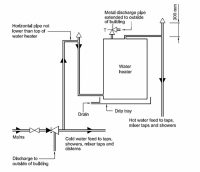
6.1.3.2 Notwithstanding the provisions of 6.1.3.1, an isolating valve shall not be provided between any pressure reducing valve and a water heater if such a pressure reducing valve incorporates an expansion relief device or vacuum relief device intended to protect such water heater.
All images supplied by Patrick Gordon
Here it tells us that if there is a pressure reducing valve with an integral expansion valve, the specific isolating valve must be before the pressure valve.
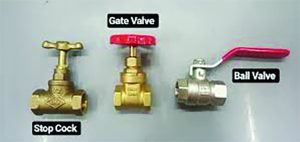
What does this mean? If you have a balanced pressure installation, with the valve positioned outside the dwelling, you are not allowed to fit any appurtenance that can isolate the hot water cylinder (HWC) from the route to expand.
It has become common practise to fit an isolating valve near the HWC so that the dwelling can still be supplied with water if the HWC should fail. This practise can continue with the proviso that a separate expansion valve is fitted between the isolating valve and the HWC. Thus, still allowing for any expansion to be effectively vented.
The integral isolating valve that is incorporated in some of the pressure control valves cannot be classified as a specific isolating valve, as when any replacement of the valve needs to take place, you still need a separate valve to isolate the water.


In this type of installation, it makes sense to fit a pressure valve that does not have an integral isolator as they are less expensive, and an isolating valve still needs to be fitted in any case.
Considering these points, it is obvious that we must re-look at the way that we currently do installations so that we can stay in line with what is required by law and also to deliver the user comfort that our customers are used to.
For any further information on this topic please contact the writer: PA Gordon at patrickg@splashworks.co.za