By Patrick Gordon
I’m often asked why an in-line strainer should be installed on the water supply to a house. The short answer: because the law requires it.

According to Section 6.1.5.1 of SANS10252/1:
“A suitable strainer shall be provided to prevent the entry of solid particles exceeding 710μm into any fittings that control water pressure or flow direction – unless such fittings incorporate their own strainers. Strainers for pipe sizes 15mm to 25mm shall comply with SANS 1808-58.”
Practical benefits
Beyond just legal compliance, there are several practical reasons why fitting a strainer is a smart move:
- Protects your fittings and appliances: After municipal work on the water supply, users often experience a sudden drop in pressure. The issue is usually not the pressure itself, but a blocked aerator or shower rose due to debris in the water.
- Simplifies maintenance: With an in-line strainer, all debris is trapped in one place, making it much easier to clean. Without one, you’re left cleaning or replacing multiple aerators, shower heads, or even dealing with appliance damage.
- Extends the life of installations: A simple strainer can prevent costly issues and prolong the performance of your taps, geysers and heat pumps.
- Cost-effective: It’s ironic that many homeowners are willing to spend thousands on filters for garden irrigation, but resist fitting a basic strainer to protect their entire household water supply.
-

- Most strainers have an arrow indicating the correct direction of flow. Image supplied by Splashworks

-
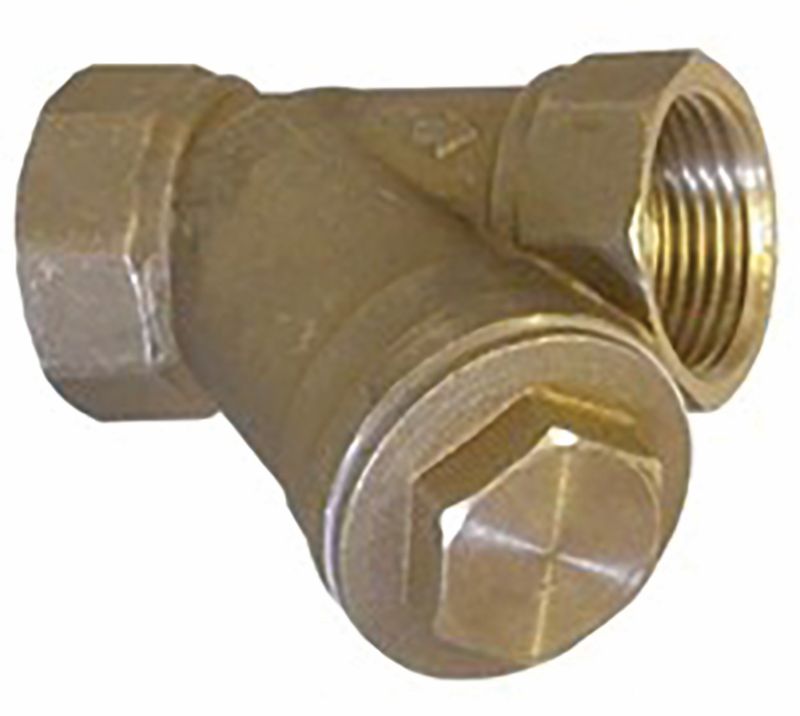
- Y strainer. Image supplied by Splashworks
Installation tips
- Use the correct mesh size
Ensure the basket or sieve is fine enough to catch all typical debris in your area. - Fit it in the correct orientation
Install it so that dirt collects in the lowest part of the body. When removing the inspection cap, the debris should fall out and not back into the pipe. - Observe the flow direction
Most strainers have an arrow indicating the correct direction of flow. Installing it backwards will render it ineffective.
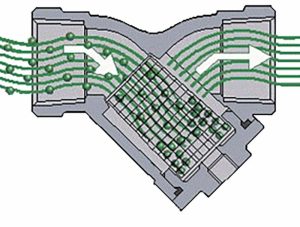
Water flow through strainer. Google free images
Real-world example
I had a personal experience with a heat pump malfunction caused by low water flow. Thankfully, I had a strainer installed. A quick clean, and everything was back to normal – no need for costly repairs or technician call-outs.
It amazes me that homeowners will spend thousands on filtration for their irrigation systems but will gripe about fitting it to the supply of the house.
A small, inexpensive component like an in-line strainer can make a big difference in your plumbing system. It ensures compliance, protects your investment, and reduces maintenance headaches.
For any further information on this topic please contact the writer: PA Gordon on patrickg@splashworks.co.za