By Samantha Eberl
Across the world, 2.1 billion people do not have taps that bring fresh water to their homes – that is 30% of the population globally. Although the most fundamental resource flows readily for many, it is easy to take that privilege for granted. However, it should not really be a privilege, but rather a human right – available and accessible to all.
 |
In the spirit of the sharing of unique experiences that shape the plumbing industries in our respective nations, the following article looks at whether gender friendly restrooms are becoming more common at construction jobsites. Written by IAPMO staff writer Mike Flenniken, it is the next in a regular series of similar articles that will run in this magazine.
Dave Viola IAPMO CEO |
The power of water is immense. It provides a manner of maintaining public health, empowers communities and allows a nation to prosper.
Otherwise, countries fall into a cycle of systemic injustice, which only increases the challenges and difficulties faced by many of their citizens. In the process, it also creates socioeconomic barriers and a classist system, in which the more privileged have the advantage of clean water whereas the less fortunate do not. Altogether, the provision of adequate water distribution is crucial for equality and growth.
The health of an individual is wholeheartedly reliant on access to clean water. As cells contain over 60% water, and it is virtually impossible to live beyond a few days without water, human bodies are inherently reliant on this resource. So, water is a human right so that people do not suffer from dehydration, diseases and general illness. It increases the longevity of citizens and improves the general standard of living. The suffering from dehydration, especially in dry climates, is brutal. It equates to approximately 1.35 million deaths worldwide.
Although this number may not seem high, it does not account for the suffering or hardship of those who lack adequate water but manage to survive dehydration. While it is possible to sustain life with unclean sources of water, these sources frequently carry disease which can cause widespread illness, and even death. Cholera, diarrhea, dysentery, typhoid and polio are all common diseases that may be transmitted through microbiologically contaminated water. Additionally, the lack of water to sanitise surfaces can cause more illnesses. Beyond these previously-listed diseases, poor sanitation creates a risk for hepatitis
Although many of these diseases could be treated relatively easily in privileged countries, there are often challenges and disparities in healthcare access, which heightens the risk of serious complications from disease. Moreover, the risk could be eliminated altogether with appropriate access to clean water and sanitation. Hence, the health benefits of ample water sources can create massive differences across the globe.
Water is a form of empowerment. From economical to social empowerment, and even gender equality, water provides vast opportunities for struggling communities. From the aspect of economical empowerment, water is a necessity to enter international industries like agriculture and livestock-rearing. Not only does it elevate the prowess of the local economy and increase access to other important resources, it can also grow a larger scale economy; that of an entire country. It allows lower class citizens to maintain a reasonable standard of living and have enough money to afford most necessities and critical expenses.
This access to necessities and an acceptable standard of living is crucial for the well-being of individuals and communities, and water is truly the rite of passage. Thus, it should be guaranteed to ensure widespread economic empowerment as the standard of living gradually rises. Even more, water can grant social empowerment.
Access to sanitation and an adequate standard of living gives an individual dignity and the confidence to set higher goals and expectations in life, primarily education. For many that feel hopeless because of their situation, water can be a source of hope and motivation. It is the building block to ambition and accomplishment. Clean water will also prevent diseases which would prevent individuals from helping their family through jobs or through education.
Many illnesses affect children, who then become unable to attend schooling and get held back in their education, which leads to higher dropout rates and fewer students to pursue post-secondary studies.
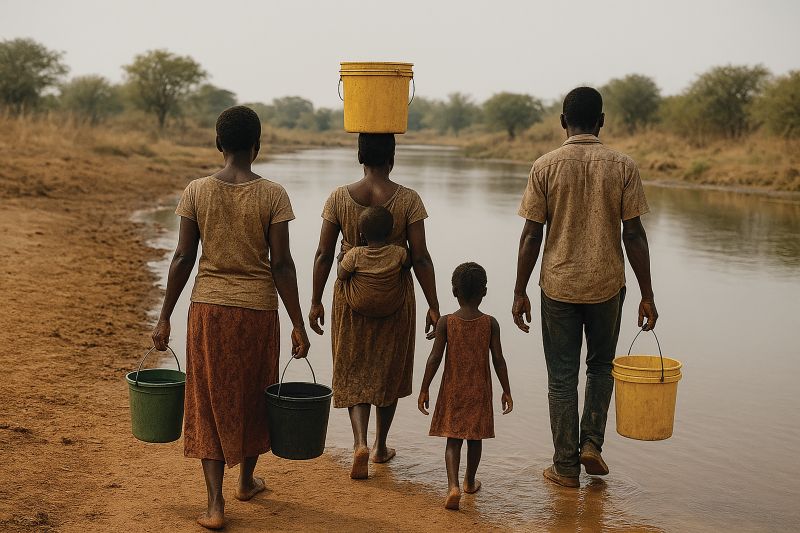
In many third world countries, the task of retrieving water from wells or rivers can take several hours, with physical and health risks. Image created with OpenAI’s ChatGPT (DALL·E)
The access to education as it relates to water even extends into the perspective of gender equality. As women and girls are often responsible for collecting water, and travelling long journeys to obtain it, they face more safety risks and fewer opportunities to spend their time differently. In many developing countries, the task of retrieving water from wells or rivers can take several hours, with physical risks such as harassment, or health risks like exhaustion and chronic pain. So, with clean water provided in a closer proximity, women and girls have the ability to spend time getting an education, working or doing other activities that would typically only be offered to men. All in all, water is a source of empowerment in the economy, socially, and among women and girls.
Water facilitates nationwide prosperity. It generates opportunities for industrial growth, ensures resilience to climate change, and hydropower generation can become a leading source of reusable, clean energy. Aside from agriculture and livestock industries, most factories, manufacturers and mines require easily accessible clean water. With this provided, the industries have the ability to grow and thrive, bettering the economy and allowing the nation to prosper. As more resources become available, water in particular, efforts can expand, which theoretically leads to wealthier citizens in the nation.
Although that may not result in a higher standard of living for the average family, it does create jobs, which may have proven a rare opportunity prior to the economic growth. The establishment of these industries also forces governments to construct proper infrastructure.
Overall, these systems conserve water, and create a new cycle of pollution control and increased accessibility to clean water. This directly provides the resources for the installation of new taps and aids additional communities. Furthermore, if the water is being managed and stored properly, it is more likely to be available even in times of drought.
For many nations global warming means more droughts, and less attainable water, specifically areas without proper management. Proper storage and efforts can make massive change. Eventually, this organisation and control of the resource can facilitate hydropower systems to be installed. As a clean, renewable source of energy, it would lower the emissions and pollutants of nations immensely. This would help to reverse the effects of climate change, encourage the cycle of eco-friendly work, and work to improve conditions for the majority. Ultimately, water is a human right because it can also provide opportunities on all levels – from the individual to the nation and beyond.
Access to water and sanitation is a human right because of the health benefits and assurance of well-being that it generates, it empowers the economy and the individual while contributing to equality, and it inspires opportunities for unimaginable growth. It destroys barriers and provides a level of social cohesion. Above all, it is a human right because of the health benefits and contributions to a higher standard of living. Although there are many challenges in establishing water management systems and providing populations with clean water, it helps to break harmful cycles and allow prosperity. Altogether, all humans deserve access to clean water, and it should be the priority of every nation.