Compiled by Tanya Olckers
Plumbing design is not just a technical detail – it’s a matter of public health and safety. Ensuring that only qualified professionals handle design, and that installations are inspected and certified, is essential. Cutting corners for the sake of appearance or convenience can have devastating consequences. It’s time we treat plumbing design with the seriousness it deserves.
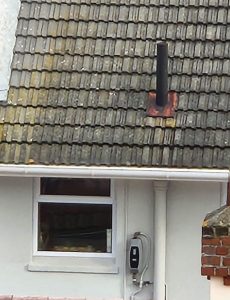
The 2.5m ventilation pipe. Image supplied by IOPSA
When it comes to plumbing and drainage systems in South Africa, compliance with legislation is not just a legal requirement – it’s a vital safeguard for both consumers and professionals. The legal framework that governs plumbing installations is structured like a pyramid, with the Constitution at the top and a series of acts, regulations and standards forming the layers beneath.
Understanding this hierarchy is essential for ensuring safety, accountability and consumer protection.
At the apex of this legislative structure is the Constitution of South Africa, which enshrines the rights to health, safety and access to basic services. All other laws and regulations must align with these constitutional principles.
Directly beneath the Constitution are key legislative acts:
- Occupational Health and Safety Act (OHSA): ensures that working environments are safe for all, including those involved in plumbing installations.
- Water Services Act: this act supports the CPA and OHSA by regulating the provision of water and sanitation services, including drainage systems.
These laws are supported by National Building Regulations Act 103 1977 with amendments, which provide the technical details and guidelines for compliance. Notably:
- Mandatory SANS 10252 – Part one and part two: covers water supply and drainage for buildings.
- Mandatory SANS 10400-P: focuses specifically on drainage systems within the broader national building regulations.
The primary purpose of these regulations and standards is to protect the consumer. Whether someone lives in a luxury mansion or an informal settlement, the same laws and standards apply. The Water Services Act defines a consumer as any end user of water services– including those in informal settlements – ensuring equal protection under the law.
Once the installation begins, the plumber assumes responsibility. It is the plumber’s duty to ensure that all work is performed according to the standards. This dual responsibility – between homeowner and plumber – creates a system of checks and balances that ultimately benefit the end user.
The vent must reach 2.5m above the ground, and 1.5m above the roof of the structure. This is vital to ensure that all gases are drawn away from the building and dispersed in the air. This also ensures that pathogens don’t make their way into the building. The pipe must also remain the same diameter throughout and not be tapered.
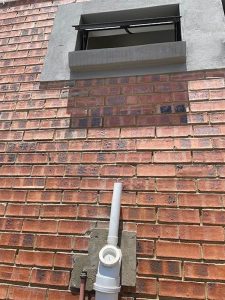
An illegal ventilation installation.
Properly installed and maintained vents also help extend the lifespan of fixtures and pipes by reducing the likelihood of corrosion and other damage. Gas and moisture can lead to deterioration over time.
In the world of plumbing, legislation is more than red tape — it’s a carefully constructed framework designed to protect everyone involved. From the Constitution down to the smallest technical standard, each layer plays a critical role. By understanding and respecting this legal pyramid, both consumers and professionals can ensure safe, effective and equitable access to water services across South Africa.
In the world of construction and plumbing, the line between aesthetics and safety is often blurred—sometimes with dangerous consequences. While a sleek, modern building may look impressive, what lies beneath the surface can pose serious health and safety risks if not properly designed and installed. At the heart of this issue is a misunderstanding of roles and responsibilities – particularly when it comes to plumbing system design.
According to South Africa’s National Building Regulations, SANS 10400, a competent person is someone registered under the Architectural Profession Act, the Engineering Profession Act, or similar legislation. These professionals – architects and engineers – are legally authorised to design plumbing and drainage systems.
The qualified plumber’s responsibility is to carry out the installation according to the approved design. They are not permitted to design the system themselves. This distinction is critical because the regulations require that the competent person:
- Prepares and submits a rational design or assessment to the local authority.
- Inspects and certifies the completed installation.
- Issues a certificate confirming compliance with all relevant standards and regulations.

Schematic diagram of a ventilated improved pit latrine. SA Plumbers Handbook
Ventilated improved pit (VIP) latrine
The VIP latrine introduced in Africa in the 1970s is widely used in developing countries, especially in water-short regions.
It is solidly constructed and, if properly used and maintained, hygienic and odourless. Pit latrines are not used in conjunction with conventional flush toilets. Only a small amount of water enters the pit and liquid is allowed to seep from the pit into the surrounding ground. In the pit, excreta decomposes into humus-like solids, water and gasses. The important point is that because of the long storage time in the pit, disease-causing organisms are eventually killed. Permission of the local authority must be obtained before constructing the VIP latrine (SA Plumbers Handbook, 2013). PA
References:
- Gerrie Botha (IOPSA)
- Steve van Zyl (IOPSA)
- Duncan Keil (UPP)
- Patrick Gordon (Splashworks)
- SA Plumbers Handbook 2013, compiled by Mervyn Jordan