By Megan O’Connor, with technical information from Chris Coetzee (OHSS Consulting) and Geoff Snelling
In this feature article, we talk about everything methane – why it is dangerous, how to correctly handle an environment with methane gas, as well as the training available for methane gas in South Africa.
The general rule of thumb is that confined spaces are regulated by
government.
Zoshua Colah | Unsplash.com
fire flame against black background. Kues1 | Magnific.com
A recent tragedy in the Vaal Triangle has once again highlighted the tragic, and sometimes fatal, results of methane gas exposure. In this particular incident, three plumbers were called to inspect a municipal drain line. The first plumber opened the drain, climbed onto his hands and knees to inspect the drain, and was then fatally hit by the gas, falling into the drain. His colleague, seeing the incident, heroically jumped into the drain to try and save him, but also tragically lost his life. The third plumber, and supervisor of the incident, was successfully resuscitated after approaching the drain.
The danger of methane gas is no new information – we’ve all seen the headlines:
‘Tragic end for three Ekurhuleni plumbers overcome by methane in Benoni manhole’ – Satori News, 30 October 2024.
‘Joburg sanitation worker dies from methane gas exposure’ – The Citizen, 7 January 2025.
‘Methane gas caused Joburg explosion’ – News24, 2 August 2023.
But why exactly is the gas so dangerous?
Methane gas
Methane gas, in confined spaces, reduces oxygen levels and can bring them very low – increasing chances of asphyxiation. Similarly, because the gas is lighter than air, oxygen can be displaced, causing rapid oxygen loss while breathing. Methane is highly explosive and highly flammable, so welding and soldering in an environment with methane can easily ignite the gas.
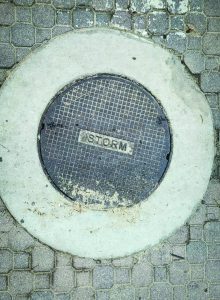
Environments where the gas is most likely to be encountered by plumber are confined spaces, including pump stations, deep sewer manholes, certain crawl spaces under suspended flooring, storm water drains and parking areas in big cities.
Making the gas even more dangerous is its invisibility – you cannot see it, you cannot smell it and you cannot taste it. This means that the only way to protect yourself from the gas is with the correct safety equipment.
The biggest misconception about methane is believing that you can rely on your senses.
You may walk in and think:
• “It smells fine”
• “It feels fine”
• “I’m not getting lightheaded, so I’m okay”
But with methane:
• You don’t always smell the buildup
• You can’t smell oxygen deficiency
• It can feel fine initially, but over an extended period it may become unsafe
TIP: Snelling posits that one sign there may be methane gas in your work space is if there are no cockroaches, or no sign of insect or rodent life in the space.
How to know if you are working in a confined space
The general rule of thumb is that confined spaces are regulated by government.
Check if the area:
• Is enclosed
• Is restricted
• Could be a place where there could be an accumulation of gases, such as methane, hydrogen sulphide and carbon monoxide
• Has one entrance and one exit
Any place where people don’t normally sit and work such as manholes and water tanks is likely a confined space. To decide whether the area is a confined space, you must consider both the physical enclosure of the area, as well as the possible hazards that could be inside of it.
The methane gas guideline
When working in a confined space that you suspect could have methane gas, follow the below guidelines:
- Use a multi-gas detector
These are as essential as any other tool in your toolbox. Besides methane gas, hydrogen sulphide, carbon monoxide and carbon dioxide should also be tested for in the space, as these are the lethal gasses that could be present in confined spaces. - Have trained personnel on site
This needs to be someone trained to use the gas detector. They must test the environment at:
• Floor level
• Middle level
• As high as the detector can go
• For manholes, the detector should be dropped to the lowest level, middle level and near the entrance - Have rescue kits on hand
The rescue kits will depend on the type of environment you are working in. For example, when working in a manhole, a rescue kit would involve a tripod system and a lanyard attached to an anchor point with a winch that can be used to pull a person out in case of emergency. - Never work alone in a confined space
There should always be someone outside of the environment you are working in, who supervises the system. This supervisor must:
• Not be distracted
• Continuously watch the work that is happening
• Keep the person inside of the confined space connected to an emergency rescue system for immediate extraction
• This person should be trained in rescue procedures and resuscitation (CPR / First Aid Level 1) - Make sure the area has enough oxygen
If there is methane or other gases in the air, pump fresh air into the space.
Note: Do not just use an extractor fan to suck out air, as this could also remove oxygen. You want to pump fresh oxygenated air into the space.
Chris Coetzee’s short checklist for confined spaces:
- Purge and ventilate
- Test high, middle and low
- Have someone continuously monitoring the situation – make sure they are trained in CPR and are always paying attention
Correct procedure: ventilation and purging
Mechanical purging is the best option to ensure the area is safe – opening the cover of the space alone is not enough as some gases are lighter than air (such as methane), while others settle lower and will not escape the area easily, such as carbon monoxide.
Best practice would be to use a mechanical high pressure pump/fan to pump oxygenated air into the space, where:
• A pump/filter unit is outside
• Filtered air is pushed through a large hose into the confined space
• The hose is placed in the space first, then the area is purged for a set time
As for how long the area needs to be ventilated before entry, there is no fixed universal time – a risk assessment will need to be conducted on the area to provide ventilation time.
Coetzee states that ventilation and oxygenation would be the one golden rule that he feels could decrease the risk to plumbers of methane. “Ensure the area is well ventilated and has enough oxygen. Don’t rely on your own senses.”
Methane and the OHS Act
The OHS Act does not have dedicated categories such as ‘confined spaces’ or ‘working at heights’, but it provides general health and safety requirements that ensure no risk is placed upon employees.
It is open to interpretation on purpose, so each company must:
• Look at its own scope of work
• Identify all risks
• Attach relevant regulations
This means that before working in the space, the company needs to have a risk assessment done. This directly refers to Section 8.2(d) of the OHS Act (duty of the employer), which states that the employer must ensure that they know all the risks and hazards associated with any work performed.
The risk assessment
A proper risk assessment must be conducted before work starts. Coetzee emphasises, “Poor planning is the biggest contributor to incidents and accidents in plumbing.”
The risk assessment:
• Is performed by a qualified person
• Provides details on:
– What the space is
– What the scope of the work is
– What is going to happen in the confined space
– The specifics of the job, such as purging times and controls
It is also through this risk assessment that an emergency rescue plan can be generated, based on the specifics of the site being worked on.
For example:
• Deep vertical confined spaces such as manholes would require a tripod system, proper hooking procedures, and continuous communication. If no response is received, immediate winching is required.
• Flat confined spaces may require direct extraction.
• Elevated confined spaces may require rope rescue kits.
Overall, the emergency plan must be tailored to the exact type of confined space and work being done.
Who conducts the risk assessment?
A plumber can qualify to do risk assessments through various training programmes. Currently, there are two main training courses: PRIME and Confined Spaces training.
- PRIME (Plumbing Risk Incident Management Education)
Includes HIRA – Hazard Identification and Risk Assessment training, covering:
• The OHS Act
• Liability
• Health and Safety representation
• Introduction to risk assessments
Completing PRIME provides templates and tools via the PRIME app.
- Confined spaces permits training
Full-day training covering confined space entry procedures and safety controls.