By Tanya Olckers
Local manufacturer SUPAHOT can produce 20 000 geyser units each month. CEO Shaaz Moosa chats to Plumbing Africa.
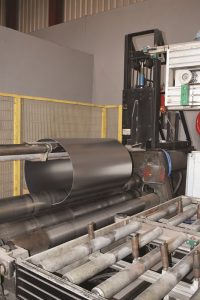
The process begins. Images by © Plumbing Africa
“Our mission is to bring the best water heating systems to the market, based on our core values of service, quality, longevity and customer engagement,” says Shaaz Moosa, CEO and CFO of Supahot. The company manufactures electric geysers and solar geyser systems and has been doing so since 2018
“Our goal is to be the go-to company for versatile geyser solutions,” says Moosa. Six years ago, he took over the Franke range and rebranded it.
However, this transition didn’t come without challenges. The barrier to entry into the industry had been set high, with existing companies dealing with nationals and the insurance industry. Undaunted, the company decided to bring in top range manufacturing machinery and to employ highly skilled staff.
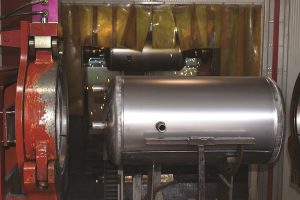
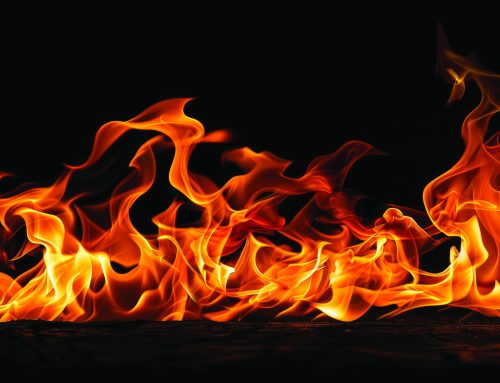
Firing up the geyser.
As one of just three manufacturers in South Africa, they took quality and localisation as the basis of their strategy for breaking into the market. To that end, they set out to create awareness of their products among customers and more importantly, plumbers.
SUPAHOT has taken their design back to basics, concentrating on durability and functionality and what is most efficient for both customer and plumber. They use a larger anode, which can extend the lifespan of a geyser. They have also kept the galvanised end cap, instead of opting for the more cost-effective plastic alternative. The metal cap retains heat, adding to energy efficiency and durability.
Quality of each geyser is inspected and closely scrutinised. Welding on these geysers is done by robotic welding machines – the same welding machines used by Toyota, Porsche, and BMW.
The enamelling process is the next most important aspect of manufacturing. They use dry powder coating process with an electrostatic system, and the geyser’s boiler is baked at 840°C to cure and bake the enamel.
-
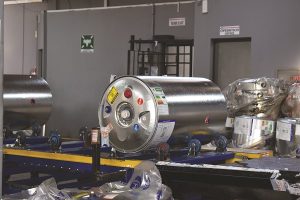
- On the conveyer belt.
-
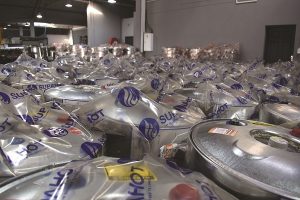
- Geysers are ready to go to market.
The company embraces technology and innovation and has introduced a specially designed foaming agent, created by a chemical engineer. The foam that is used between the boiler and the outer case further assists in retaining the heat, which in turn regulates how often the thermal element kicks in. They also added a second anode to help mitigate circumstances surrounding corrosion.
This process adds to these geysers’ energy efficiency.
Yes, the geyser does come in as a little more costly by a rough 15% margin, however their prices are market related, and takes into account that these geysers are designed to last longer and work hard to bring the customer savings on energy.
Moosa says he would ultimately like consumers to be as aware of the features of their geyser as they are today of their television sets, fridges, and other appliances in their homes – as the geyser is also an appliance.
-
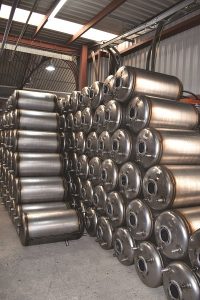
- Completed geysers.
-
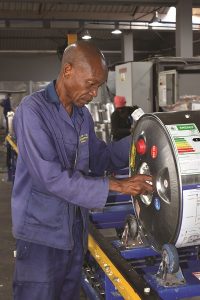
- Final checks are performed.
“A geyser is an electrical item, and I want to make the end user – be it the plumber or the homeowner – more aware of the range of products available, as well as their differences” says Moose. “They shouldn’t buy a geyser brand just because they have to, they must make an informed decision.”
The SUPAHOT facility has the capacity to produce about 20 000 units a month, and these are distributed through the retail market, both independents and nationals. Even though this offering is energy efficient and equipped with the latest technologies, it keeps in line with the company’s mission to be a versatile geyser solution to plumbers everywhere.
Moosa says a plumber can install any element he chooses: “The company strives to service the plumber, homeowner and retailer.”