Compiled by Tanya Olckers
What are the obstacles facing artisan education and what are the solutions?

Apprenticeship is a way to get experience and learn. Images by Freepik
Stats SA has reported that there is a decline in individuals who only have a primary school education. In 1994, at the dawn of South Africa’s democracy, the number of people with only a primary school – or less – education stood at 59%. In 2022, the number has dropped to 22%.
According to a media release from Stats SA, youth unemployment climbed in the fourth quarter of 2023 to 44.3% from 43.4% in the third quarter. Other sources place that percentage significantly higher.
School learners are a different kettle of fish when it comes to education, however. For those seeking training in plumbing and other trades, there is greater access to pursue these careers. However, skills gaps, out of date curricula and mentors who have no real trade experience can be seen as part of the issues these potential artisans face. Then there’s the issue of cost of training, unaccredited or fly-by night trade colleges and lack of on-site work experience opportunities for learners.
“One obstacle is access,” says Sherrie Donaldson from Harambee. “How do you find out about opportunities? There is a cost involved to a young person from printing CVs to transport to interviews or classes. This is what is being addressed with platforms such as SA Youth.
“We have observed that the gap between education and the private sector Kreishandwerkschaft is enormous,” says Katja Lommetz. She is convinced that cooperation between colleges and private economy must be improved on a sustainable scale to create practical employment opportunities for skilled craftspeople.
There are other issues, too. TVET colleges typically offer three-year learning programmes. These learning programmes should be centred around theory and practical, however, not all TVET colleges are created equal.
It could be difficult for some colleges to invest in machinery and equipment, and some lecturers in these colleges may not be exposed to the industries that they are teaching in.
“Access to experiential learning is vital, but we see a number of factors like access to workplaces that prevent that from taking place,”says Mookapele. “For example, TVET colleges have learners that are waiting to placed, but the colleges may not be aware of which industry partners are willing to take apprentices in for their practical training requirements. This speaks to the need for private sector and public colleges to work closer together. Another factor that limits access to workplaces is the distance between the available workplaces to rural areas, making it difficult for learners from rural villages to access these workplaces.”
Financial constraints on colleges and students could also be a contributing factor.
What seems to be prevalent is businesses not offering internships because of the cost of providing the intern a salary,” says Katja Lommetz. “Students then end up staying at home or continuing their studies instead of gaining experience in practical work.”
This is echoed by Sherrie Donaldson of Harambee. “There is a government focus on increasing work experience opportunities. In the long run however, the bigger issue lies in work readiness that enables young people to grab opportunities.”
“Over 300 young people are currently enrolled in our apprenticeship programme, gaining relevant skills and workplace exposure,” says Dan Kabongo, marketing associate with BluLever Education. “We have a shortfall of 40,000 qualified artisans, with a national target to produce 30,000 per year by 2035. Currently, just 13,000 students graduate from government TVET colleges yearly, with less than 5% of these actually qualified as artisans. We are not educating enough artisans to meet the demands of the industry.”
“The other aspect that is a continuous concern is that new technology, products and materials are regularly integrated or introduced into the plumbing industry and the curriculum is not frequently updated to incorporate these items or technology which causes the apprentices or learners to be at a disadvantage when exposed to these in the workplace,” says Gerrie Botha, National Apprenticeship is a way to get experience and learn. Training Manager with IOPSA.
“When it comes to skilled artisans, we have both a quantity gap and a quality gap,” says Kabongo. “Artisan training has not changed much over the last 50-100 years. Innovations in education have not filtered through to technical training. There have been many initiatives that have failed to address the challenges in artisan education, perpetuating a lack of trust. The resulting environment makes training increasingly difficult.”
While the QCTO (Quality Council for Trades and Occupations) is the higher education qualification accreditation body and have a number of registered occupationally aligned qualifications for QCTO-accredited training providers to train on, there is also a need for shorter courses aligned to new trade practices that will assist learners and current plumbers to upskills themselves. This is a focus for EWSETA who works closely with IOPSA and other professional bodies to ensure that education and training solutions can be adaptable and agile.
“Low unemployment numbers are linked to Covid-19 and low economic growth as well as the learner’s lack of work experience or not possessing the right technical skills,” says Donaldson. She points out that people with disabilities and females have a harder time in the job and skills market than males. “Young women are not given as many opportunities. Young women need to consider things such as transport costs and childcare should they want to study or work.”
An additional gap exists when it comes to knowledge of South African National Standards (SANS). This regulates the plumbing industry and without knowing what SANS documents are required in the plumbing environment, learners and apprentices may be skipping critical aspects of what they need to know for compliant installation, a knowledge gap that could place both themselves and the consumer at risk.

Access to education will provide opportunities
“Being a professional and successful artisan can only be achieved if the artisan continuously develops and improves themselves by being up-to-date with the SANS standards, new technology and having a finger on the pulse of what is happening in the industry,” says Botha. Most of the manufacturers and suppliers of plumbing components and materials do training on their products and it would be in the plumbing artisan’s best interest to enquire about these interventions and attend the training provided.”
Health and safety consultant and Plumbing Africa contributor Chris Coetzee also highlights that governance when it comes to training is not strict. “There is currently a bill waiting to be passed that seeks to absolve all unit standard training,” he says, “This could be a dangerous move, even though the government’s intentions are to seek out a higher standard of training. This means it could involve an additional cost of between R 5000 and R 10000 per person for assessments and examinations, which would then make the training unaffordable for those who are wanting to undertake it.”
Not just that: it could also result in delays in receiving qualifications and create a backlog.
This results in an increase in fly-by-night colleges that take advantage of these loopholes and provide unaccredited and sub-standard training and fraudulently produce certificates, and people will pay good money for a legitimate looking certificate. Artisans require to undertake a Trade Test and their Trade Certificate will be issue by the National Moderation Artisan Body (NAMB) only. Because of corruption, client companies are saying that the contractors need to meet certain safety specifications, which would include managing health and safety training.
SETAs provide funding, and there could be delays at a particular SETA if there is a backlog.
EWSETA’s response however, indicates that all SETAs have their own Discretionary Grant (DG) funding processes and procedures. While EWSETA cannot speak on behalf of all SETAs, with regard to their own Grants Funding Policy, it is clear in terms of funding requirements and if both parties commit to remaining aligned to those funding requirements and all relevant documents are provided by the training institution, delays can be mitigated. Over and above, SETAs can only issue serial numbers for trade test applications once a provider applies for a serial number. Once generated, a trade test can be undertaken the timeline of which lies in the control of the provider. The trade test results are then sent back to the relevant SETA for processing with NAMB. The certificate does not get issued by the SETA but from NAMB who may themselves be experiencing high volumes of applications. There are many players in the artisan training value chain, and it will require all to work collaboratively to ensure that learners are not unduly prejudiced and impacted negatively.
In the case where the learner is in employment while still studying, complications could arise as the learner’s employer gets involved. The money received from SETAs needs to be distributed between the training provider/college, the employer, and a stipend for the learner, making it aAccess to education will provide opportunities. costly exercise.
EWSETA CEO, Mpho Mookapele says “A business needs a fully skilled individual. This depends on the employer’s willingness to have faith that the employee they invest in to be upskilled, will remain with their company once they have gained these skills.” For Mookapele, this thinking should fundamentally shift “Ultimately, the larger the pool of skilled individuals in the sector, the more options are available, and an industry can grow as a result.”
How can we fix it?
Training can take place in the workplace or at colleges. Upskilling can also be done through various workshops. There are several initiatives to train the trainer, which are valuable as it ensures that those who are lecturing and mentoring are up to date on the latest developments, equipment and processes available, and can then pass this information on to their students. EWSETA is a part of establishing and driving initiatives like these.
“EWSETA is strategically intentional in our support for the development for lecturers and the growth of public colleges by exposing lecturers to training opportunities and initiatives that will help them grow and develop their own skills set,” says Mpho Mookapele. Through EWSETA and their close collaboration and partnerships with industry, lecturers are capacitated on latest industry trends and exposed to new technologies that are coming online in the energy and water sectors. They place focus on “Train the Trainer” programmes which allows for enhanced quality teaching in the classroom and greater trust by industry in our public college system. Understanding industry skills demand needs through credible skills planning, EWSETA works with a number of strategic partners to capacitate TVET colleges, particularly with the provision and installation of new technology equipment within the colleges themselves allowing for industry-aligned practical training to take place. Their support extends to the provision of a number of learning programmes, Workplace Integrated Learning (WIL) programmes and even career guidance.
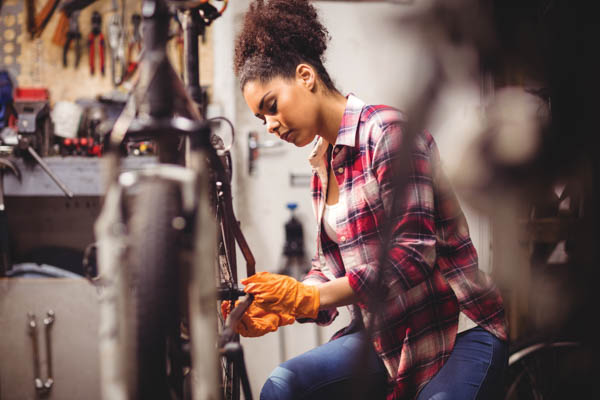
Experiential learning is important.
Mpho Mookopele would like to see a revival of occupationally directed programmes and qualifications. “How do you proactively respond to recent developments in the sector? Introduce more accredited skills programmes as determined with industry,” she says. “Expose graduates to short skills programmes. Involve them in managerial development. Training can take place in the workplace or at colleges. Upskilling can also be done through various workshops.
Kreishandwerkschaft is a German organisation that incorporates the values of apprenticeship based on the excellent German dual vocational training. It’s motivated to export these values internationally. “Craftspeople have special expertise in professional practice, in vocational education and in business operations,” says Katja Lommetz.
The group seeks to partner with the private sector and educational institutions to bring about a deeper understanding and greater communication between the two.. Ultimately, getting employment for these students is the goal.
This is a goal shared by Harambee, an organisation that is focused on assisting unemployed youth with finding work. Training, of course, features as part of that process of getting a young person to make a meaningful economic contribution.
BluLever emerged in 2018, with a focus on creating better qualified artisans. This focus stemmed from the grim reality of what they saw as an ineffectual training system, swelling unemployment numbers and often unemployable youth.
Dan Kabongo from BluLever mentions that the BluLever initiative is designed to empower Africa’s artisans with skills for the future. “We’re developing Africa’s artisans as ethical industry professionals of global standard,” he says, “We do this through holistic and innovative vocational education and training, essentially a 3-year apprenticeship programme.”
Kabongo believes that South Africa needs holistic, innovative, industryled solutions.
There is also a need for ongoing learning for plumbing professionals, and an opportunity needs to be made for those who are skilled, but not yet qualified. EWSETA and IOPSA are working together on ARPL programmes to help these individuals gain their qualifications.
As for further learning, apart from various suppliers offering regular training on their products, IOPSA also provides opportunities for those who want to improve existing skills or add a few new ones. “We encourage all plumbing artisans to register on the IOPSA LMS System (Registration is free) available on www.iopsa.org where they would be able to access training webinars, YouTube presentations and more on a variety of topics pertaining to plumbing which they can access at their own leisure to gain a better understanding and knowledge of a specific topic,” says Gerrie Botha
IOPSA also offers periodic CPD accredited Installers Training on a variety of topics (some examples include geyser installations, and drainage installations) in all the regions where the plumber/installer can gain a better understanding of installations they are expected to conduct on a daily basis, in an effort to uplift and encourage participants to provide a professional and compliant service to the community.