By Megan O’Connor, with technical input by Steve van Zyl and the Copper Development Association Africa
Copper plays a vital role in plumbing. Here, we look at its role, its advantages and disadvantages, the different types of copper pipes, and the different ways to connect pipes as defined by SANS.
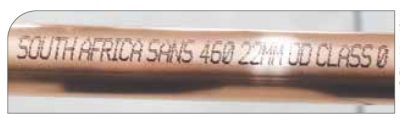
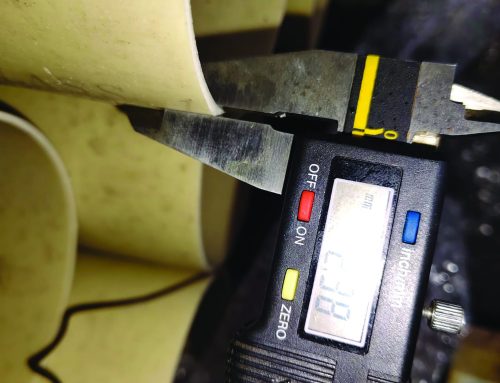
The marking on copper piping, as required by SANS 460. © Plumbing Africa
The importance of copper tubing in a plumbing system stems from its proven track record as a safe, reliable and long- lasting component in a plumbing installation.
Advantages of copper pipes
- Copper is a hygienic metal that kills pathogens with its antimicrobial properties
- Certain classes of SANS 460 copper pipe can be formed and bent, potentially saving you on fittings
- Long life expectancy
- Copper forms a protective oxide layer that prevents it from corroding which extends its life span1
- Durable
- Recyclable
- Rigid, holds structure
- Can withstand high water temperature and pressure
- Copper is an excellent thermal conductor1
- Punctured copper pipes are simpler to repair than plastic pipes as the damaged section can be sealed using a ‘slip coupling’ rather than replacing a full section of plastic pipe3
- Copper is fire resistant and will not burn or support combustion or decompose into toxic gases1
- The use of copper produces few harmful emissions during its lifecycle compared to other materials1
- Copper has excellent thermal conductivity, making it highly efficient for the use in both hot and cold water and heating systems1
- In a South African context, copper tubing is locally manufactured – contributing towards the sustainability of the local communities and economy, and national back up and support is available to the plumbing industry1
Disadvantages of copper pipes
- If improperly installed, the product will fail
- Exceeding the maximum flow velocity of water in the pipe may result in the removal of the patina layer and this could possibly cause future pitting of the pipe inner surface
- The water supply quality may also have a negative effect on the copper, but as a rule, potable water should present no problem
- Copper pipes may not be ideal for use with certain water types – for example, soft water may be more corrosive, sometimes present in borehole water, which can lead to pitting corrosion of the pipes
- SANS 460 Class 0 and 1 copper tubes are not allowed to be installed underground.
- The following may disrupt the copper oxide scale: excessive water velocity in pipe, elevated water temperature, turbulence due to joint profile, 2.4m/s or less for cold water, 0.9m/s for hot water 60°
Antimicrobial CopperCopper pipe has inherent antimicrobial properties that are effective against bacteria, viruses, and fungi. It achieves this by releasing copper ions that damage micro-organisms, disrupt their cell walls, and cause oxidative stress. This “contact killing” is continuous and can kill up to 99.9% of bacteria within a few hours. |
The different types of copper tubes (pipes) and where to use them SANS 460 defines four different types of copper tubes (pipe) for potable water:
Class 0 – Extra light
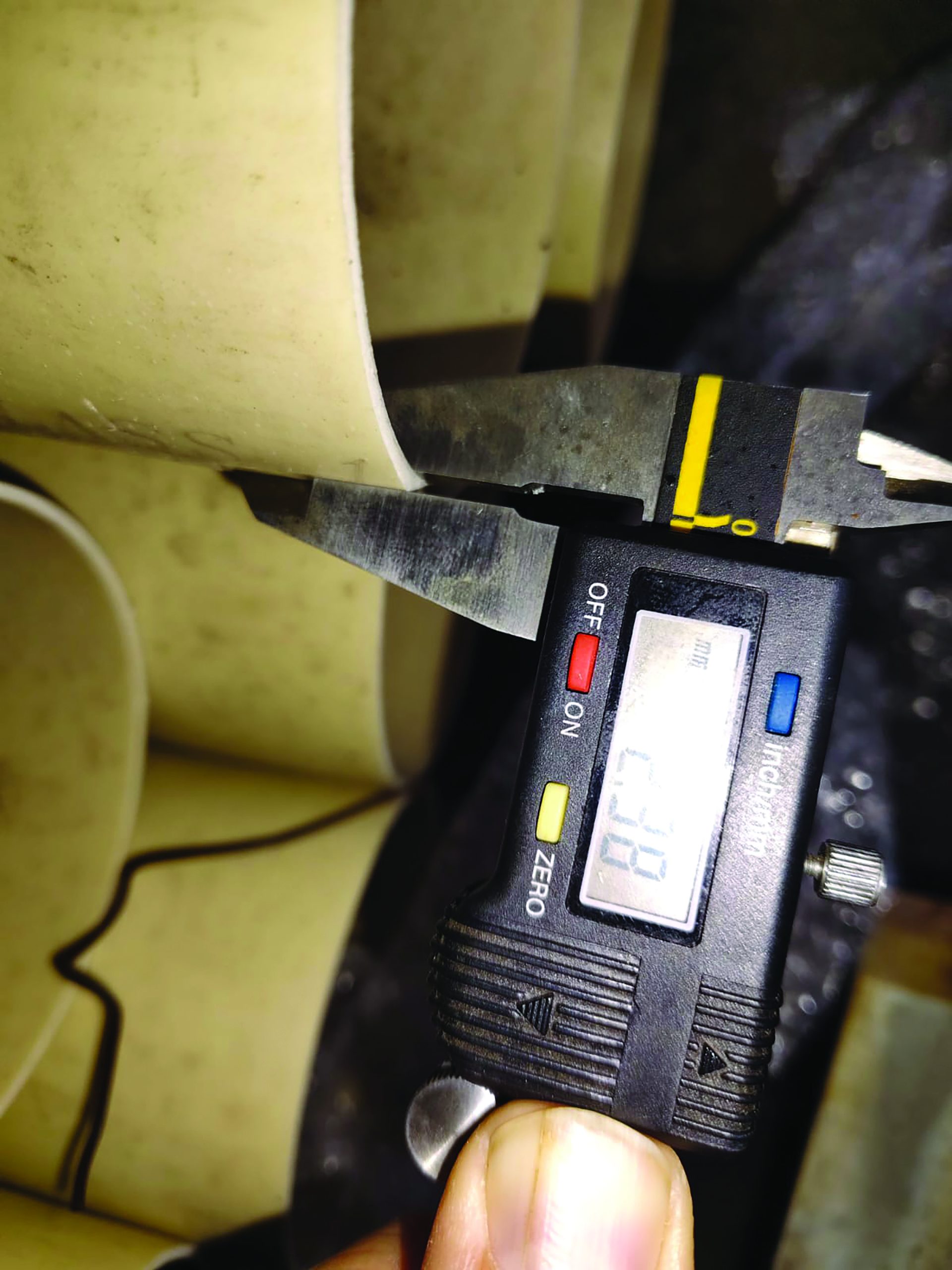
Class 0 copper pipe is a hard drawn, thin-walled tube. Compression fittings should be used as the jointing method with Class 0, however, they are not recommended for use with flare-type compression fittings. These pipes are suitable for general use in domestic plumbing services (particularly where minimisation of costs is the principal factor affecting choice). Class 0 tubes should be used only for straight line connections, i.e. they are not suitable for deforming into bends.
Class 1 – Light
Class 1 copper pipes are half-hard, thin-walled tubes, for above-ground use only. These pipes are suitable for general use in domestic plumbing services (particularly where minimisation of costs is the principal factor affecting choice). Class 1 tubes are such that the workmen required to perform any bending work on them should have been trained and should be equipped with tube-bending equipment specifically designed to bend this class of tube (SANS 10252-1, ref 5.2.1.2).
Class 2 – Medium
Class 2 copper pipes are half-hard, heavy gauge tubes with excellent bending qualities. This class can be used underground under normal conditions i.e. non-aggressive soils. These tubes are suitable for general use in domestic plumbing services.
Class 3 – Heavy
Class 3 copper pipes are heavy, thick-walled, half-hard copper tubes with excellent bending qualities. These tubes are designed specifically for underground use where soil movement takes place. These are heavier-gauge tubes than those of class 2 and are particularly suitable for underground use.
The following information shall appear in legible and indelible marking on each straight tube at intervals of length not exceeding 1m:
- the manufacturer’s name or trade name or trade mark;
- the nominal outside diameter followed by the letters OD; and
- the class.
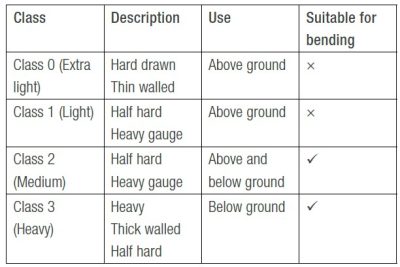
Figure 1: The different types of copper pipes.
How to connect copper pipes
There are two main methods of joining copper pipes:
Note: Always use compliant plumbing products and fittings, in the case of copper pipes the following copper-based fittings for copper tubes are required.
- Capillary soldering fittings that comply to the requirements of SANS 1067-2. Solders, fluxes and the method of soldering described in SANS 460 and the manufacturer’s instructions (SANS 10252-1:2018 Edition 3.2).
- Compression fittings that comply to the requirements of SANS 1067-1. Copper-based fittings for copper tubes that comply with the requirements of SANS 1067-1,or SANS 1067-2, as relevant (SANS 10252-1:2018 Edition 3.2).
Before connecting pipes, you need to:
- Measure and cut the pipe. Measuring must be accurate so that the joint quality is not compromised – if the pipe is too short the joint cannot be made, and if the pipe is too long there is a danger of cocking the tube and putting strain on the system which can affect service life.
- Cutting the pipe leaves a small burr on the end of the tube, and if this is not removed by reaming, erosion-corrosion can occur. Tools to ream tube ends include the reaming blade on the tube cutter, half-round or round files, a pocket knife, and a suitable deburring tool.
- Cleaning is crucial to remove oxides and surface soil, which can interfere with the strength of the joint and cause mechanical failure. Make sure to clean where the joint will go, as well as a bit above this area with either a sand cloth or abrasive pad. The socket of the fitting should also be cleaned – with either a sand cloth, abrasive pad or properly sized fitting brush.
How to capillary solder
Soldering is the traditional method of connecting copper pipes. It involves heating the joint and applying solder, which melts and forms a bond, creating a leak-proof connection. Here are the steps to soldering copper pipes:
1.Measure, cut, ream and clean the pipe end to be joined.
2. Apply flux paste or spray2 to both interfacing sections of the outer tube and the inner surface of the fitting. Flux paste can be applied with a brush or applicator. Flux spray can be sprayed directly onto the interfacing sections of the tube exterior and interior of fitting – typically a cleaner and quicker fluxing option that also results in less burn marks on the completed joints
Do not use more flux than directed as excess flux can result in latent corrosion, unintended flux in the pipes and wasted cost.2

Copper Development Association Africa
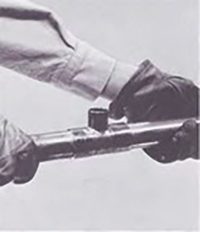
3. Assembly: Once fluxed, assemble the tube and fitting – a slight twisting motion ensures even coverage by the flux. Remove excess flux.
Copper Development Association Africa
4. Apply a flame to the assembly. Concentrate on the centre of thefitting and not the mouth of the fitting. Slowly move the flame from the fitting to the tube and then remove the flame.

Copper Development Association Africa
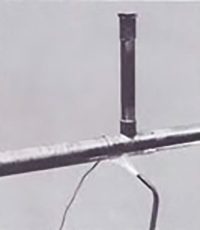
5. Apply solder to the mouth of the fitting to see if it is drawn in – i.e. Keep testing with solder until solder is drawn in.
Copper Development Association Africa
6. Allow the fitting and pipe to cool, then wipe the assembly with a damp cloth to remove excess flux – this prevents the assembly from turning green.

Copper Development Association Africa
Advantages
- The phenomenon of capillary action draws the solder into the gap between the wall of the pipe and the copper fitting, forming a tight seal
- A soldered joint is stronger than any other connection method
- If your installation space is tight, soldering is often an easier installation option3
- A soldered joint is stronger than the pipe itself
Disadvantages
- No room for mistakes – once a pipe has been soldered, you would need to cut the actual pipe to make any corrections to the assembly
- Soldering is an expensive process
- It takes a while to cool down, which could result in delays until work can resume. NOTE: Do not shock cool (apply cold water to the joint once soldered), as this can cause fracturing of the joint
- A certain amount of knowledge and expertise is required to solder
How to apply a compression fitting
Compression fittings are a popular choice for connecting copper pipes as they don’t require heat or solder. Instead, they use a compression nut and ring to create a tight seal. Here’s how to use compression fittings:
1.Measure, cut, ream and clean the pipes
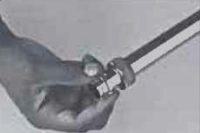
2. With the fitting assembled, first place the nut and then the ring onto the tube
© IMD, 2014
3. Push tube with ring and nut into the fitting’s body, right up to the fittings inner shoulder

© IMD, 2014
4. Hand-fasten the nut, ensuring that the tube stays firmly against the inner shoulder of the fitting

© IMD, 2014
5. After fastening the nut by hand, use a suitable spanner to fasten the fitting until the tube cannot move, turn the nut another half turn to make it a seal.

© IMD, 2014
Note: The cut has to be square and straight, otherwise it is just a process of pushing the pipe into the fitting and tightening with a spanner.
Advantages
- Suitable for application where the pipes are exposed to excessive heat
- Good for use in confined spaces
- Can be disassembled
- Good for use when persons have limited soldering and brazing experience
Disadvantages
- If not installed tight enough, pressure can pop the fitting off
- Compression fittings can be costly
- Dislodgement is more likely to occur PA

A copper-pipe installation. © Plumbing Africa
References
- Dave Ronquest, Maksal
- Lyle Peters, STAG industrial products.
- Keith, DOW-Jones Maintenance Services